Key Takeaways:
- GFC hair treatment works by supporting existing hair follicles rather than creating new ones.
- While the treatment may help reduce hair fall, it is not considered a permanent solution for every type of hair loss.
- The long-term outcome often depends on factors such as genetics, hormonal changes, stress, overall health, and the underlying cause of hair fall.
- Results can vary from person to person, and maintenance sessions may sometimes be recommended.
- GFC therapy is generally explored during the earlier stages of thinning, when hair follicles are still active.
- A proper diagnosis is important before starting treatment, as different causes of hair loss may require different approaches.
Most hair loss treatments are judged by one simple question: do they work? Patients often think about it differently. Once hair fall starts reducing and the hair begins looking healthier, the focus quickly shifts to something else. How long will the improvement last? Will the hair start shedding again after a few months? Is this a temporary fix or a long-term solution?
That is exactly why GFC hair treatment has generated so much interest. The treatment is increasingly being explored by people looking for non-surgical options for hair thinning and ongoing hair fall. At the same time, it has also raised an important question: can it stop hair fall permanently?
The answer requires a little context. Hair loss is rarely caused by a single factor, and no treatment works in isolation from the biology behind it. While gfc treatment for hair may help strengthen follicle activity and reduce shedding in suitable candidates, the long-term outcome often depends on what is causing the hair loss in the first place.
What Is GFC Hair Treatment?
People often hear about GFC hair treatment after noticing their hair isn’t behaving the way it used to. Maybe there is more shedding than before. Maybe the scalp is becoming easier to see in photographs. Whatever the trigger, the treatment tends to come up quite early during the search for non-surgical options.
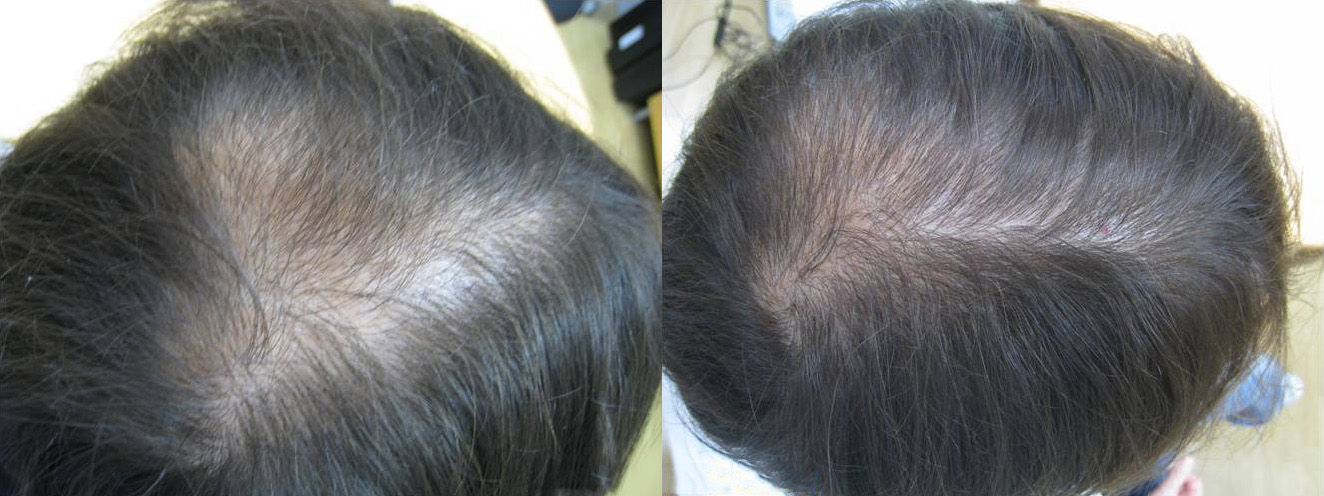
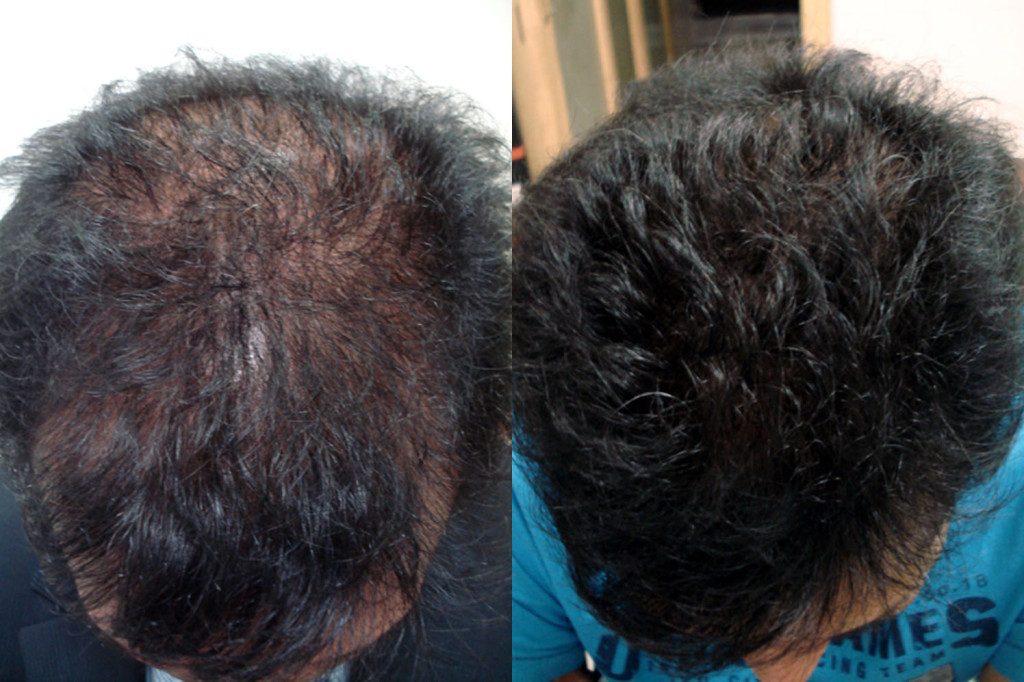
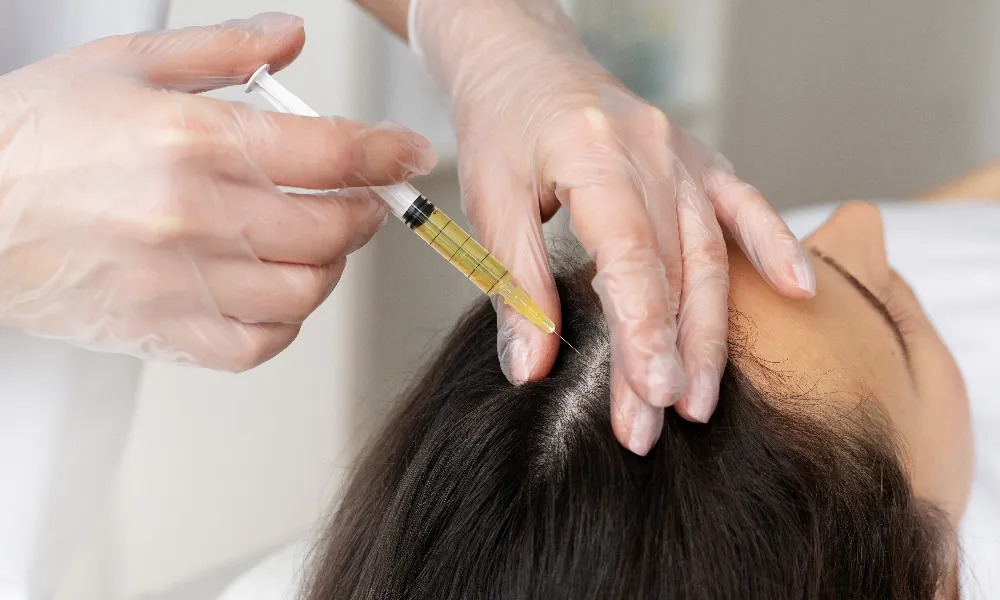
Growth Factor Concentrate (GFC) uses growth factors prepared from the patient’s own blood and introduces them into the scalp. The treatment focuses on existing hair follicles rather than creating new ones, which is why it is commonly discussed in cases of thinning hair and ongoing hair fall. Unlike a hair transplant, it does not involve surgery.
Can GFC Hair Treatment Permanently Stop Hair Fall?
This is probably the question that comes up most often during consultations. The expectation is understandable. If a treatment is helping with hair fall, it is natural to wonder whether the problem has been solved for good.
The answer depends on what is happening beneath the surface. Hair loss linked to stress may behave differently from hair loss linked to genetics or hormonal changes. The same treatment can produce different experiences for different people.
That is why GFC hair treatment is usually discussed in terms of improvement and maintenance rather than permanence. While it may help support healthier follicle activity, it cannot control every factor that affects hair growth over the years ahead.
How Long Do GFC Hair Treatment Results Typically Last?
One of the more common questions after starting GFC hair treatment is how long the benefits are likely to stay. There isn’t a single answer because hair loss does not follow the same pattern in everyone. Some people continue to notice improvement for an extended period, while others may require maintenance sessions sooner than expected.
The underlying cause of hair fall often plays a major role. Hair thinning linked to genetics, for example, may behave differently from temporary shedding triggered by stress or other factors. For this reason, GFC therapy is often viewed as part of ongoing hair care rather than something with a fixed duration of results.
What Are The Factors That Influence the Success of GFC Hair Treatment
Not everyone experiences the same response to GFC hair treatment, even when the treatment itself is performed in a similar way. This is because hair loss is influenced by a number of factors that extend beyond the procedure alone.
- Cause of Hair Loss
- Stage of Hair Thinning
- Age and Overall Health
- Consistency of Treatment
- Lifestyle Factors
Who May Benefit Most from GFC Hair Treatment?
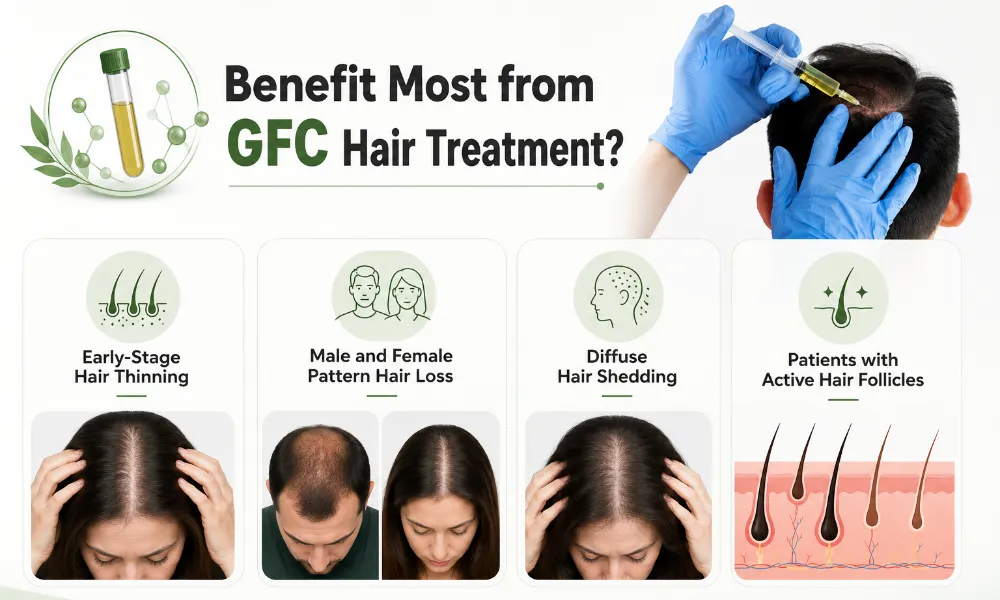
The people who enquire about GFC hair treatment are not always dealing with severe hair loss.
Early-Stage Hair Thinning
This is often where interest in treatment begins. The changes may be subtle, but they are noticeable enough for people to start looking for options before the thinning progresses further.
Male and Female Pattern Hair Loss
Pattern hair loss usually develops over time rather than appearing suddenly. Many individuals explore GFC therapy during the earlier stages, when hair is still present but visibly thinner than before.
Diffuse Hair Shedding
Not all hair loss follows a recognisable pattern. Some people experience increased shedding across the scalp, making the hair appear less full overall. In these situations, understanding the cause remains an important part of the discussion.
Patients with Active Hair Follicles
The treatment works with follicles that are already there. Because of this, it is generally considered in areas where hair growth is still present rather than in long-standing areas where follicles may no longer be active.
When GFC May Not Deliver Long-Term Results
Like any hair loss treatment, GFC hair treatment may not produce the same long-term response in every situation.
Advanced Baldness: When hair loss is already extensive, there may be fewer active follicles available to respond.
Scarring Alopecia: Some forms of hair loss permanently affect the follicles, which can limit the potential for improvement.
Untreated Medical Causes of Hair Loss: If an underlying condition remains unmanaged, hair fall may continue despite treatment.
Unrealistic Expectations: GFC may support healthier hair growth, but it should not be viewed as a permanent solution for every type of hair loss.
Conclusion
Hair loss rarely comes with guarantees, which is one reason questions about permanence are so common. For some people, GFC hair treatment becomes a useful option for managing thinning and reducing ongoing shedding. For others, the conversation may be broader and involve understanding why the hair loss is happening in the first place.
The treatment works within the reality of how hair behaves. Genetics, hormones, health conditions, and age can continue to influence the hair growth cycle over time. Because of that, the focus is often placed on improving hair quality and supporting existing follicles rather than promising lifelong results.
A detailed assessment with Dr. Rinky Kapoor can help determine whether GFC therapy fits your situation and what outcomes may realistically be expected.
FAQs
Does hair fall return after GFC treatment?
It can. Some people continue to do well for a long time, while others notice thinning again later. A lot depends on what was causing the hair fall to begin with.
How long do GFC hair treatment results last?
There isn’t one answer that fits everyone. Some people are happy with their results for an extended period, while others may need maintenance sessions along the way.
Is GFC a permanent solution for male pattern baldness?
Male pattern hair loss tends to progress over time. GFC may help support existing hair, but it does not switch off the genetic tendency behind the condition.
Can GFC prevent future hair loss?
Not completely. Hair can still be influenced by factors such as age, hormones, stress, health conditions, and family history.
How many GFC sessions are usually required?
That varies from person to person. The number is usually decided after looking at the degree of thinning and the overall condition of the scalp.
Who is the ideal candidate for GFC hair treatment?
In general, people who still have active hair follicles and are noticing thinning rather than complete hair loss tend to explore the treatment more often.