Key Takeaways:
- Functional melanocyte loss defines vitiligo clinically, producing sharply demarcated depigmented patches on the skin.
- Disease activity, extent of involvement, lesion location, and patient age together determine the treatment approach, rather than any one factor in isolation.
- Topical medications, NB-UVB phototherapy, and vitiligo laser treatment in Mumbai cover most cases; surgical procedures remain reserved for carefully selected patients with confirmed stable disease.
- Repigmentation outcomes tend to improve with earlier clinical evaluation, since treatment initiated before extensive spread generally responds better.
- Because vitiligo behaves as a chronic condition with genuine potential for recurrence, long-term management depends on sustained follow-up rather than a single treatment course.
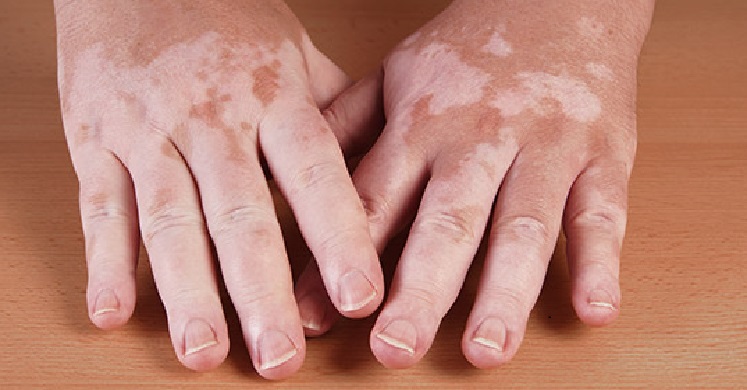
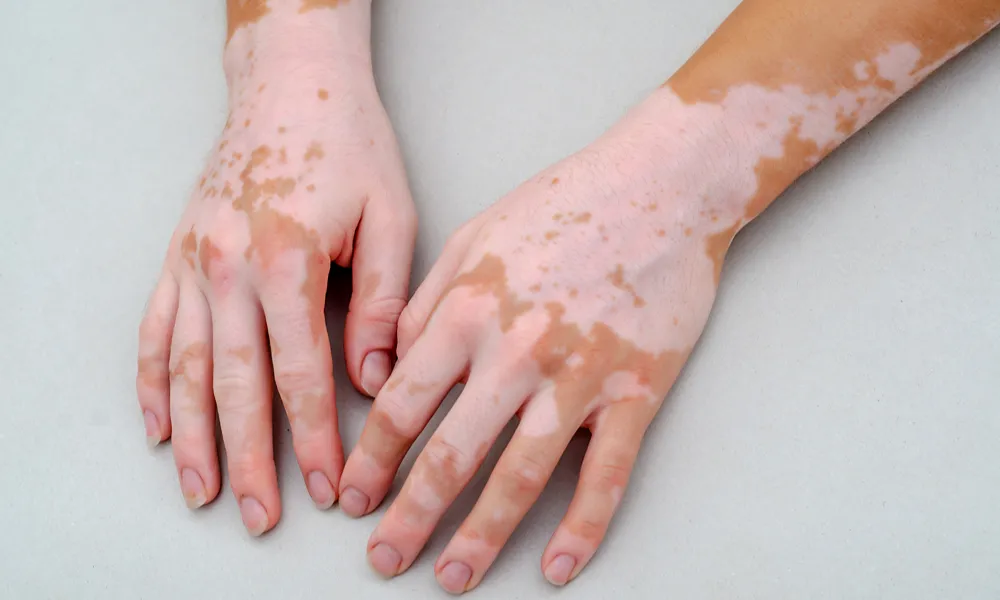
Vitiligo happens when the skin gradually loses melanocytes, the cells that produce melanin, the pigment that gives skin its colour. As these cells stop working properly, patches of skin lose their colour and turn a clear, well-defined white. How much of the body is affected, and how quickly it spreads, differs from person to person.
Vitiligo doesn’t cause physical harm, and it isn’t contagious. Even so, it can affect someone emotionally and socially, especially when the patches appear somewhere visible, like the face or hands.
There’s no single treatment that works for everyone with vitiligo. The goal is usually to stop the condition from spreading further and to help the skin regain its colour where possible. Depending on how much of the skin is affected and how active the condition is, treatment might include topical medication, narrowband UVB phototherapy, laser treatment for vitiligo, or, in some cases, surgery. Dr. Rinky Kapoor builds a treatment plan around each patient’s specific case, based on a full clinical assessment, using established dermatological and laser technologies.
What Is Vitiligo?
At its core, vitiligo comes down to melanocyte loss, the cells that produce melanin. Where they stop working, a white patch takes their place, sharply defined against normal skin. What actually triggers this isn’t fully settled; autoimmune mechanisms, genetic predisposition, and oxidative stress all seem to play a part, usually together rather than acting alone.
The face, hands, feet, elbows, knees, and skin around the eyes or mouth are affected most often, though patches can turn up almost anywhere. Hair growing within one sometimes loses its colour too, worth noting on examination.
Clinically, it’s either active or stable, new or spreading lesions versus a picture that’s held steady for a while. That distinction isn’t just descriptive. It genuinely shapes treatment planning, since several procedures only make sense once stability’s been confirmed; treating during active disease tends to backfire.
Who Can Benefit from Vitiligo Treatment in Mumbai?
Patients present at different stages, some with patches that appeared only weeks ago, others with vitiligo they’ve lived with for years. Early intervention matters most during active disease, mainly to limit spread. Once the condition is stable, options widen, vitiligo laser treatment in India, and selected surgical techniques become reasonable considerations in a way they wouldn’t during active disease.
Age isn’t a barrier; both children and adults can be treated. What actually shapes the approach is a combination of factors: age, the extent and location of skin involvement, current disease activity, and the overall clinical assessment.
What Are the Best Treatments for Vitiligo in Mumbai?
The right treatment for vitiligo depends on evaluating the type, extent, location, and activity of the condition. Based on this, a dermatologist in Mumbai may recommend one or more of the following approaches.
Topical Medications
Topical corticosteroids and calcineurin inhibitors are commonly prescribed for localised vitiligo. These work by reducing disease activity and encouraging repigmentation, and tend to be most effective when started during the early stages of the condition.
Narrowband UVB (NB-UVB) Phototherapy
NB-UVB phototherapy is considered a standard treatment for widespread vitiligo. It delivers a specific wavelength of ultraviolet light that stimulates melanocyte activity and is often recommended for patients with extensive or multiple depigmented patches.
Vitiligo Laser Treatment
Vitiligo laser treatment in Mumbai, most often performed using the 308-nm Excimer Laser, is primarily used for localised lesions. It delivers targeted ultraviolet light to the affected area while minimising exposure to surrounding skin, and may be combined with topical medication to improve the treatment response.
Surgical Treatment
For carefully selected patients with stable vitiligo, surgical options such as melanocyte transplantation or skin grafting may be considered. These are generally reserved for areas that have remained stable over an extended period and have shown limited response to medical therapy.
Combination Therapy
Many patients see better results from a combination of treatments rather than relying on a single approach. Depending on the pattern and stability of the vitiligo, a dermatologist may combine topical medication, phototherapy, laser treatment, or surgery as part of an individualised plan.
Is Laser Treatment Effective for Vitiligo?
Vitiligo laser treatment using the 308-nm Excimer Laser is commonly recommended for patients with localised vitiligo. It delivers targeted UVB light to depigmented patches, stimulating repigmentation while limiting exposure to the surrounding skin. Treatment is usually performed over multiple sessions, with the response varying according to the site and stability of the lesions. The Excimer Laser is often combined with topical medications or NB-UVB phototherapy to achieve better clinical outcomes, although maintenance treatment may be required in some patients.
Is There a Permanent Treatment for Vitiligo?
Vitiligo is a chronic pigmentary disorder, and treatment is directed towards achieving stable repigmentation rather than a permanent cure. Clinical outcomes vary depending on disease activity, the duration of vitiligo, lesion location, and individual treatment response. In many patients, well-controlled disease can remain stable for prolonged periods, although recurrence may occur and require maintenance therapy or follow-up.
Can Natural Remedies Treat Vitiligo?
Many people with vitiligo look into natural remedies, herbal preparations, dietary changes, and nutritional supplements among them. The scientific evidence behind these approaches remains limited, though, and they shouldn’t be treated as a substitute for evidence-based medical treatment.
Vitiligo is a complex autoimmune pigmentary disorder, which is exactly why treatment decisions need a dermatologist’s involvement, following a proper clinical assessment. Natural remedies can have a place as complementary measures, but only once they’ve been discussed with a healthcare professional first.
Why Choose Dr. Rinky Kapoor for Vitiligo Treatment in Mumbai?
Good vitiligo care starts with an accurate diagnosis, disease activity, pigment loss, and patient goals all factored in. Dr. Rinky Kapoor, one of the best dermatologists in India, builds treatment plans from detailed clinical evaluation, combining medical therapy with advanced dermatological technologies, including vitiligo laser treatment where warranted.
Patients get ongoing care and real follow-up, not a one-off consultation, whether newly diagnosed or managing long-standing vitiligo. That’s largely why patients travel from across Mumbai and beyond for this kind of focused management of pigmentary disorders.
Conclusion
Getting vitiligo treatment right starts well before any procedure is chosen, with an accurate diagnosis and a clear read on disease activity. From there, the plan has to be built around the individual, since no single approach works for everyone. What’s changed over the years is how many real options now exist: medical therapy, phototherapy, laser technology, and surgical procedures have all advanced enough to make genuine repigmentation and long-term control achievable for far more patients than before.
At TEC®, Dr. Rinky Kapoor brings this together through evidence-based treatment protocols paired with advanced dermatological technologies. For anyone searching for the best skin doctor or best skin clinic for vitiligo treatment in Mumbai, a specialist consultation is really the starting point, it’s what actually determines which approach fits a particular patient’s skin and clinical picture.
FAQs
Can vitiligo spread to the entire body?
The progression of vitiligo varies between individuals. In some patients, the condition remains localised, while in others, new depigmented patches may develop over time depending on disease activity.
Does vitiligo treatment work better if started early?
Early treatment may provide better disease control and improve the likelihood of repigmentation, particularly when vitiligo is still active and limited in extent.
Can children undergo vitiligo treatment safely?
Yes. Children can receive vitiligo treatment, but the choice of therapy is based on factors such as age, disease severity, and the extent of skin involvement. Treatment should always be supervised by a dermatologist.
How long does it usually take to see improvement in vitiligo treatment?
Repigmentation is gradual and often becomes noticeable after several weeks or months of treatment. The timeline varies according to the treatment modality, lesion location, and individual response.
Is vitiligo treatment painful?
Most medical treatments, including topical medications and NB-UVB phototherapy, are painless. Excimer Laser treatment is generally well tolerated, while surgical procedures are performed under local anaesthesia to minimise discomfort.
Can vitiligo return after successful treatment?
Yes. Vitiligo may recur even after successful repigmentation, particularly if the disease becomes active again. Regular follow-up and maintenance therapy may be recommended to reduce the risk of recurrence.