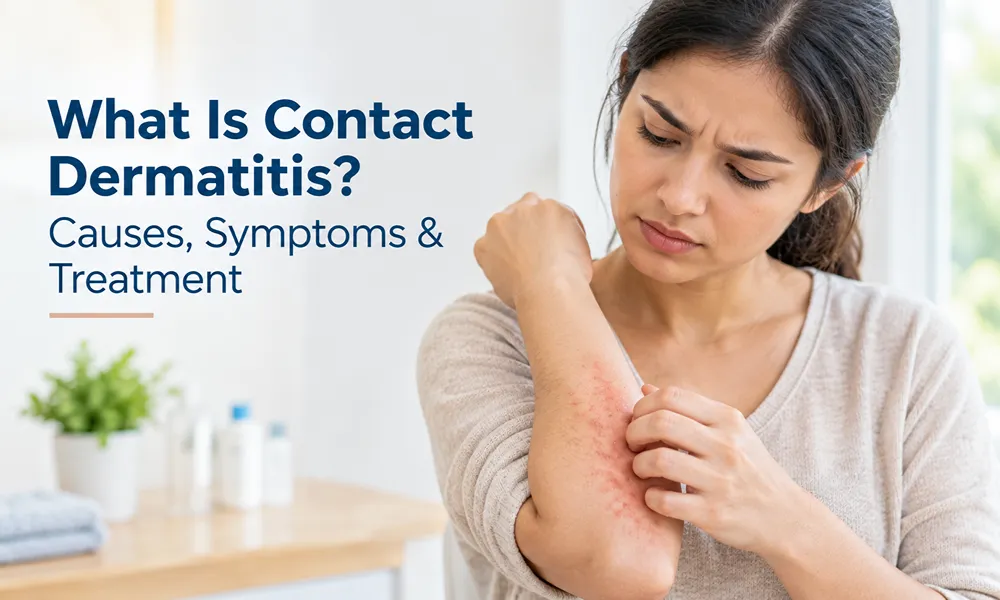
Key Takeaways:
- Contact dermatitis develops when an irritant damages the skin barrier or an allergen triggers an immune response.
- Common triggers include detergents, cosmetics, hair dyes, fragrances, nickel, and repeated water exposure.
- Treatment focuses on avoiding the trigger, restoring the skin barrier, and controlling inflammation.
- Patch testing can help identify the allergen when allergic contact dermatitis is suspected.
- Persistent or recurring symptoms need dermatological assessment to guide treatment and reduce the risk of complications.
Contact dermatitis is an inflammatory skin reaction caused by direct exposure to an irritant or an allergen. The presentation depends on the substance involved and the duration of contact, and typically includes itching, redness, dryness, a burning sensation, or a localised rash. Ongoing exposure sustains the inflammation and delays healing, which makes identification of the trigger essential to management. At The Esthetic Clinics, dermatologist Dr. Rinky Kapoor evaluates each skin reaction to establish its cause and plan appropriate treatment.
What Is Contact Dermatitis?
Contact dermatitis is a type of eczema that develops when a substance either disrupts the skin barrier or provokes an immune response. The condition has two main forms. Irritant contact dermatitis results from direct damage to the skin by agents such as detergents, chemicals, or repeated wet work.
Allergic contact dermatitis is a delayed hypersensitivity reaction that occurs in previously sensitised individuals on re-exposure to an allergen, most commonly nickel or fragrance compounds. Both forms can produce itching, erythema, scaling and blistering. The condition is not contagious. Irritant reactions often appear within minutes to hours of exposure, whereas allergic reactions usually develop 24 to 72 hours later.
What Causes Contact Dermatitis?
Contact dermatitis arises from barrier damage caused by an irritant or from an immune reaction to an allergen. Common triggers fall into four groups:
- Personal care products: Soaps, cosmetics, skincare formulations, fragrances, & hair dyes contain ingredients that can irritate the skin or act as allergens. Para-phenylenediamine (PPD) in hair dye is a well-documented example.
- Household and workplace chemicals: Detergents, cleaning agents, and solvents strip the skin barrier, and the risk increases with repeated exposure.
- Metals and accessories: Nickel in jewellery, watch straps and clothing fasteners is one of the most frequent causes of allergic contact dermatitis.
- Water and repeated washing: Frequent handwashing and prolonged wet work remove the protective lipid layer of the skin and increase its susceptibility to irritants.
What Are the Symptoms of Contact Dermatitis?
The clinical features vary with the trigger, the site involved, and the severity of inflammation. Symptoms may begin shortly after exposure or appear later, particularly in allergic reactions.
Common symptoms include:
- Itching: Persistent pruritus that intensifies with continued exposure.
- Redness or discolouration: Inflamed patches that may appear red, violaceous or darker than the surrounding skin, depending on skin tone.
- Dryness and scaling: Rough, flaking skin resulting from barrier disruption.
- Burning or stinging: A sensation more typical of irritant reactions, particularly after contact with soaps or chemicals.
- Swelling and blisters: Acute inflammation can cause oedema and small fluid-filled vesicles.
- Cracking and thickening: Chronic inflammation and scratching may lead to fissuring and lichenification.
Where can contact dermatitis occur?
The hands are the most commonly affected site due to repeated contact with irritants. The face, eyelids, and neck often react to cosmetics, fragrances, and hair products, and eyelid skin is especially reactive because of its thinness. On the lips, contact dermatitis causes dryness, scaling, redness, and cracking, and lip products or toothpaste ingredients are frequent culprits. The distribution of the rash often suggests the likely trigger, though clinical assessment is needed to confirm it.
How Is Contact Dermatitis Treated?
Treatment begins with identifying and avoiding the causative substance. Without this step, inflammation persists despite other skin care measures. Suspected products should be discontinued, and new products should not be introduced while the skin recovers.
Skin Care and Home Treatment
Mild cases often improve once exposure stops. The affected area should be cleansed gently with lukewarm water, harsh cleansers avoided, and a bland, fragrance-free emollient applied to support barrier repair. Cool, damp compresses can relieve itching and burning. Scratching, exfoliation, and fragranced products tend to worsen the reaction.
Home care should aim to reduce irritation rather than test home remedies. Essential oils, acids, and similar active ingredients can intensify inflammation or introduce new allergens. Recovery time depends on the severity of the reaction and on complete avoidance of the trigger, so no method guarantees rapid resolution.
Medical Treatment
For persistent or moderate to severe inflammation, a dermatologist may prescribe a topical corticosteroid for a defined period. Depending on the site and clinical findings, alternatives such as topical calcineurin inhibitors may be used, particularly on the eyelids and lips, where thin skin increases the risk of steroid-related side effects.
When allergic contact dermatitis is suspected, patch testing helps identify the specific allergen. Standardised allergens are applied to the back under occlusion, and the skin is assessed at set intervals, usually at 48 hours and again at 72 to 96 hours, for delayed reactions. A positive result allows the patient to avoid the allergen with precision.
When Should You See a Dermatologist?
A dermatologist should assess a rash that persists despite avoidance of the suspected trigger, recurs, spreads, or becomes painful. Marked swelling, extensive blistering, oozing or signs of secondary infection, such as pus or increasing tenderness, also require medical evaluation.
Breathing difficulty or swelling of the tongue or throat indicates a medical emergency and needs urgent care. Severe or persistent reactions on the lips or eyelids should be reviewed promptly. Chronic inflammation and scratching can result in skin damage, infection and lasting pigmentary change. Dr Rinky Kapoor at TEC evaluates persistent or recurring symptoms and recommends an appropriate management plan.
Conclusion
Most cases of contact dermatitis respond to trigger identification, strict avoidance and a suitable skin care routine. The cause is not always apparent, however, especially when several products or environmental factors are involved. Persistent inflammation may need prescription treatment or patch testing to confirm an allergen. When symptoms recur or fail to improve with basic care, a dermatologist can establish the diagnosis and direct treatment. Early assessment also reduces the frequency of flare-ups and the risk of complications.
FAQs About Contact Dermatitis
How long does contact dermatitis take to go away?
Mild cases often begin to improve within a few days of avoiding the trigger. Complete resolution can take two to four weeks or longer, depending on severity and whether exposure continues.
Can contact dermatitis come back?
Yes. Re-exposure to the same irritant or allergen can cause recurrence. In allergic contact dermatitis, sensitisation is usually lifelong, so long-term avoidance of the allergen is necessary.
Can contact dermatitis leave dark marks?
Yes. Inflammation can lead to post-inflammatory hyperpigmentation, which is more common in darker skin tones. These marks fade gradually once the inflammation settles, though this may take several months.
Can contact dermatitis spread?
Contact dermatitis is not contagious. A rash may appear at new sites after further exposure, or when the allergen is transferred by the hands, and some allergic reactions extend beyond the original contact area. A spreading rash of unclear cause should be assessed.
Can a dermatologist find out what is causing contact dermatitis?
Yes. A dermatologist reviews the rash, its location and possible exposures. When an allergic cause is suspected, patch testing can identify the specific allergen and guide both treatment and future prevention.