Key Takeaways:
- Stretch marks can be improved but usually cannot be completely removed.
- Newer red or purple marks tend to respond better to treatment than older white marks.
- Laser treatment, microneedling, and selected topical treatments can improve their colour and texture.
- Results develop gradually, and multiple sessions may be needed depending on the marks and skin type.
- Dr. Rinky Kapoor can assess the stretch marks and recommend a suitable treatment based on their type, stage, and individual skin characteristics.
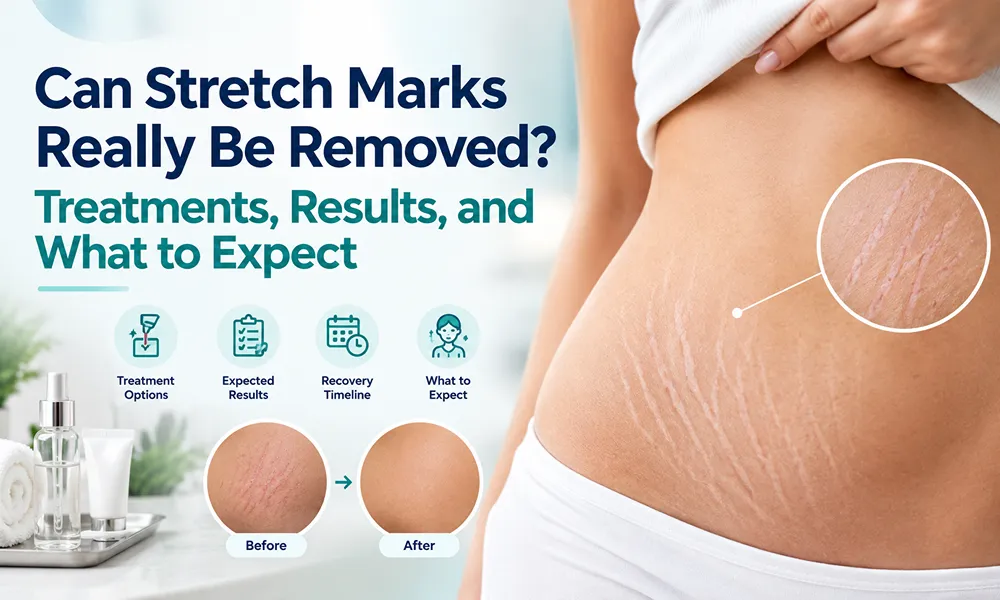
Striae, commonly called stretch marks, are linear changes in the skin that occur when stretching damages the collagen and elastin fibres of the dermis. Pregnancy, rapid growth, weight fluctuation, and hormonal changes are among the usual causes. In the early stage, known as striae rubrae, the marks are red or purple. With time, they lose their colour and become the pale, slightly depressed lines described as striae albae.
The damage sits below the skin surface, which is why topical creams alone produce limited improvement and older marks seldom fade completely. The aim of treatment is to reduce their visibility by improving colour and texture. Red striae tend to respond more readily than white ones. Dr. Rinky Kapoor, one of the best dermatologist in Mumbai, evaluates the type and stage of the stretch marks before advising on suitable treatment.
Can Stretch Marks Really Be Removed?
This is one of the most common questions patients ask, and the honest answer is that stretch marks cannot be removed but can be improved. Much depends on their colour. Red or purple stretch marks are recent, and the skin beneath them still has an increased blood supply and active collagen repair. These features allow treatment to work more effectively. White marks are older. The dermis under them is thinner, pigment cells are fewer, and the tissue behaves more like a settled scar.
What Causes Stretch Marks?
Stretch marks appear when the skin is put under tension more quickly than the dermis can adjust. In most patients, more than one factor is responsible.
- Rapid weight gain or loss: Sudden changes in body size strain the collagen and elastin fibres that support the skin, causing them to tear or weaken.
- Pregnancy and puberty: The abdomen, breasts and thighs are commonly affected during pregnancy, while adolescents often develop marks on the hips, thighs and back during growth spurts.
- Hormonal influences: Raised cortisol levels, whether from conditions such as Cushing’s syndrome or from long-term use of oral or topical steroids, reduce collagen production and make the skin more prone to striae.
- Genetics: Stretch marks often run in families. Inherited differences in skin structure and elasticity explain why some people develop them easily while others do not.
Which Stretch Mark Treatments Actually Help?
Treatment is planned after examining the stretch marks for their colour, depth, age & location, and taking the patient’s skin type into account. In practice, laser procedures, topical agents and collagen-stimulating treatments are the main options, and they are often used in combination.
Laser Treatment for Stretch Marks
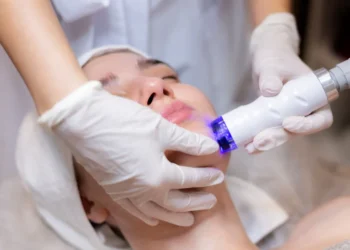
For recent red or purple striae, vascular lasers such as the pulsed dye laser reduce redness by acting on the dilated blood vessels in the affected skin. Older white striae are more commonly treated with fractional lasers. A course of several sessions is generally required. Laser settings must be adjusted for darker skin tones to reduce the risk of pigmentation changes.
Stretch Mark Removal Creams
Topical products help maintain skin hydration but produce only limited change in mature striae. Tretinoin and hyaluronic acid have shown modest benefit in early red marks. Tretinoin should not be used during pregnancy or breastfeeding. Once the dermal collagen has been damaged and the marks have turned white, creams cannot restore the underlying structure.
Other Treatment Options
Microneedling, radiofrequency microneedling and platelet-rich plasma (PRP) are also used to improve skin texture by encouraging new collagen formation. They may be performed on their own or alongside laser sessions. The most appropriate option is decided after clinical assessment, with a clear discussion of the improvement that can realistically be expected.
Laser Stretch Mark Removal: What Results Can You Expect?
Laser treatment works by encouraging the skin to produce new collagen, which slowly improves the marks over time. Most patients need three to six sessions, with a gap of four to six weeks. After treatment, the marks usually look smoother, flatter & closer to the natural skin colour, although they don’t disappear completely.
The results depend on the following factors:
- How old the marks are: New stretch marks respond better than marks that have been present for many years.
- Colour of the marks: Red or purple marks are newer and improve more easily. White marks are older and take longer to show change.
- Skin type: People with darker skin need extra care during laser treatment, as the skin can sometimes develop dark patches afterwards.
- Type of laser used: Different lasers are used for red marks and white marks, so the doctor selects the one that suits your skin.
- Number of sessions: Completing the full course of sessions gives better results than stopping after one or two.
Is Stretch Mark Surgery an Option?
Stretch marks on their own are not an indication for surgery. They may, however, be removed as part of a body-contouring procedure if they lie on the excess skin being excised. A common example is abdominoplasty, or tummy tuck, in which the loose skin of the lower abdomen is taken away along with the stretch marks it contains. Surgery is considered only when there is genuine skin excess, and the patient is otherwise suitable for body-contouring treatment.
How to Choose the Best Stretch Mark Treatment
The right treatment for one patient may not suit another. Recent red marks, for example, often respond well to vascular laser or topical tretinoin, while older white marks usually need fractional laser or microneedling to improve texture. Skin type also plays a part. Before starting treatment, Dr. Rinky Kapoor examines the marks and explains the likely results, the number of sessions involved, and any possible side effects.
Stretch Mark Treatment in Mumbai: What Should You Consider?
Stretch mark treatment in Mumbai should begin with a consultation, where the doctor checks how old the marks are and whether they are red or white, as this guides the choice between laser therapy, microneedling, or both. Patients should be told how many sessions are planned, what recovery involves, and which side effects may occur. The cost of stretch mark removal in Mumbai depends on the method used, the size of the area and the number of sessions.
Final Thoughts
Stretch marks are common changes within the skin and usually cannot be completely erased. However, appropriate treatment can make them less noticeable by improving their colour, texture and overall appearance. The response depends on the type and maturity of the stretch marks, skin characteristics, and treatment approach.
A professional assessment can help identify the most suitable option and set realistic expectations. Dr. Rinky Kapoor can evaluate the skin and recommend a treatment plan based on the individual pattern and characteristics of the stretch marks.
FAQs About Stretch Mark Removal
Can laser treatment completely remove stretch marks?
No. Laser treatment makes stretch marks lighter, smoother, and less noticeable, but it cannot erase them entirely. The extent of improvement depends on how old the marks are and on the patient’s skin type.
Does laser stretch mark removal work on old white stretch marks?
Yes, although the change is usually slower and more modest than with newer marks. White striae have a reduced blood supply and less pigment, so fractional lasers are generally used to improve their texture over several sessions.
How many laser sessions are needed for stretch mark removal?
Most patients require three to six sessions, spaced four to six weeks apart. Deeper or more extensive marks may need additional sessions, and the doctor will review progress before deciding whether further treatment is necessary.
What is the best stretch mark treatment?
This varies between patients. Red marks often respond well to vascular laser, while white marks are more commonly treated with fractional laser or microneedling. The doctor recommends the most suitable option after examining the skin.
Can stretch marks come back after treatment?
Marks that have been treated do not return, but new ones can form if the skin is stretched again, for example during pregnancy or after significant weight gain.
How much does stretch mark removal cost in Mumbai?
The cost of stretch mark removal in Mumbai depends on the treatment method, the size of the area, and the number of sessions required. An exact estimate can be given after the consultation, once a treatment plan has been decided.