Key Takeaways:
- Childhood skin problems are common, but they do not always have a simple cause.
- A rash that lingers, spreads, or keeps coming back should not be dismissed.
- Changes in birthmarks, recurring infections, and severe acne may need specialist evaluation.
- The sooner a skin concern is understood, the easier it is to manage appropriately.
- Parents do not need all the answers; knowing when to seek advice is often enough.
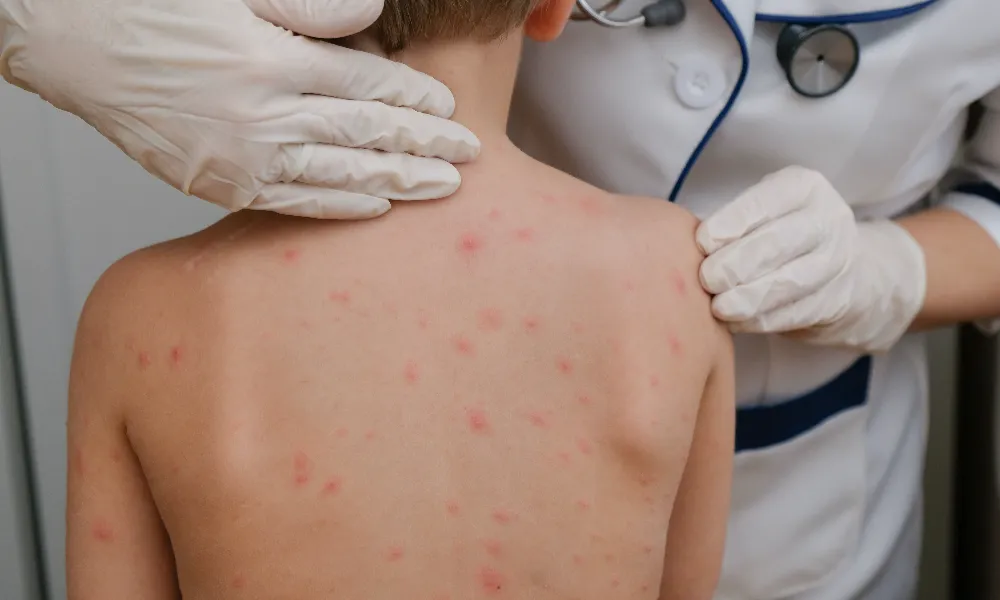
A skin problem on a child can be difficult to ignore. Sometimes it’s a rash that appears suddenly. Sometimes it’s dry, itchy skin that keeps coming back no matter how many creams you’ve tried. It could be a birthmark that seems to be changing, small bumps that weren’t there before, or a scalp condition that just doesn’t improve.
The tricky part is that many childhood skin conditions can look similar in the beginning. Some settle with basic care and a little patience. Others continue to spread, return frequently, or make children increasingly uncomfortable. This is often where parents are left with questions. Is it something harmless that will pass on its own? Or is it time to seek specialist advice?
Understanding the difference isn’t always easy. In this article, we’ll look at some of the common skin concerns seen in children, signs that may need professional attention, and when it may be worth consulting a pediatric dermatologist in Mumbai.
What Is a Pediatric Dermatologist?
Your child has a skin problem that isn’t settling down. The creams haven’t helped much. The rash keeps returning. Then someone mentions seeing a pediatric dermatologist. At that point, most parents aren’t looking for a medical definition. They just want to know whether they’re seeing the right person.
A pediatric dermatologist looks after skin, hair, scalp, and nail concerns in children, including newborn babies, infants, school-age children, and teenagers. They are the specialists parents are often referred to when a skin condition needs further evaluation or a clearer diagnosis. For many families, the goal is simple: understand what is causing the problem and find the most appropriate way to manage it.
Common Skin Problems Seen in Children
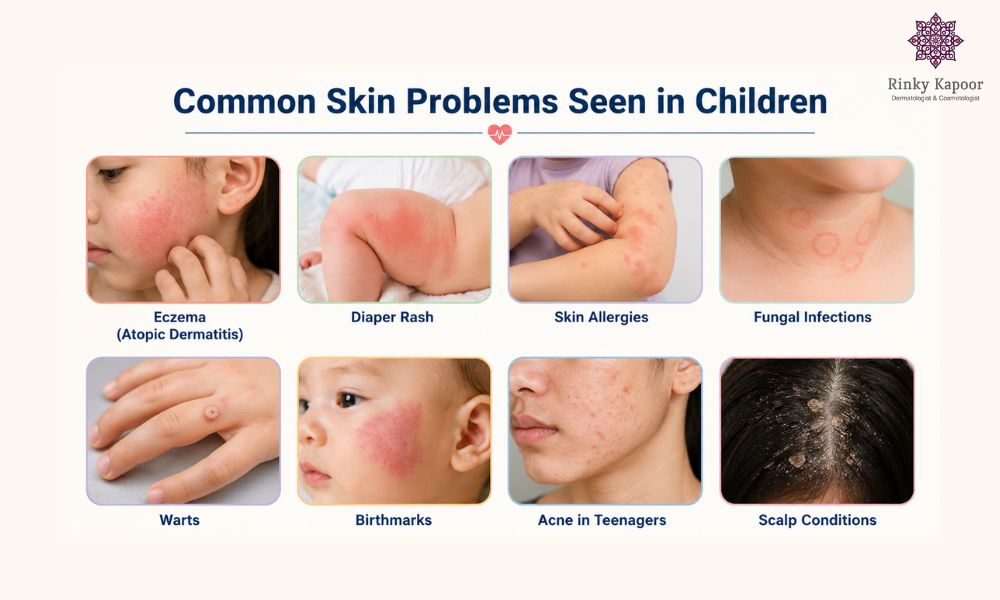
Skin concerns are common during childhood, but they do not always look the way parents expect. A rash, an itchy patch, or small bumps can have very different causes, which is why some problems need a closer look when they do not improve as expected.
Eczema (Atopic Dermatitis)
The first sign is not always the rash. Sometimes it’s the scratching. Parents notice their child rubbing the same area again and again, especially at night. Then come the dry patches, the redness, and the cycle that seems to improve for a while before returning.
Diaper Rash
Most diaper rashes clear fairly quickly. The rash looks angry, the skin becomes uncomfortable, & despite trying different creams, the improvement never quite lasts.
Skin Allergies
Skin allergies rarely arrive with an explanation. One day, the skin is fine. The next day, there is redness, itching, or a rash that wasn’t there before. Figuring out what triggered it can sometimes be more challenging than dealing with the rash itself.
Fungal Infections
Many parents are surprised when they hear the word “fungal.” The reason is simple. These infections do not always look like what people expect. They can easily be mistaken for dry skin, irritation, or another common rash.
Warts
Children are often less bothered by warts than their parents are. Sometimes they are discovered completely by accident. Other times they become impossible to ignore because they keep growing, spreading, or appearing in awkward places.
Birthmarks
Most birthmarks become part of the background. Parents see them every day and stop thinking about them. What usually brings them back into focus is change. A different colour. A different shape.
Acne in Teenagers
Teenage acne is common. That does not mean teenagers find it easy. For some, it becomes a source of frustration long before it becomes a medical concern.
Scalp Conditions
Scalp problems have a habit of lingering. The itching continues. Flakes keep coming back. Different shampoos are tried. When nothing seems to change, parents often start looking for answers beyond routine hair care.
What Are The Signs Your Child Should See a Pediatric Dermatologist?
Most childhood skin problems are more annoying than serious. The difficulty is knowing which ones will disappear on their own and which ones won’t.
Skin Conditions That Do Not Improve
Parents usually wait. A few days. Sometimes a week. The concern starts when the rash is still there long after everyone expected it to be gone. Or when the itching settles, only to return again. Or when the same flare-up keeps showing up despite treatment.
Frequent Skin Infections
Children get cuts, scrapes, and infections. That part isn’t unusual. What feels different is when the same type of infection keeps coming back. A fungal infection returns. Another appears a few months later.
Changes in Birthmarks or Skin Growths
Most parents could probably point out a birthmark on their child without even looking. That’s why changes are often spotted quickly. A mark seems darker. Sometimes it starts bleeding or becomes irritated. Even small changes tend to attract attention because they weren’t there before.
Severe Acne or Scarring
Teenagers often expect acne. Scars are another matter. Breakouts that become severe, painful, or start leaving marks behind can be difficult to ignore. For some teenagers, the effect is visible on the skin. For others, it’s visible in their confidence.
When Should Parents Seek Immediate Medical Attention?
Don’t wait if your child has:
- A rash along with a fever
- Painful blisters
- A rash that is spreading quickly
- Swelling around the face, lips, or eyes
- Breathing difficulties
- Sudden hives appearing across the body
- A skin infection that seems to be getting worse rapidly
These situations are different from routine skin concerns and should be assessed as soon as possible.
Why Early Consultation Matters
It is natural for parents to wait and see if a skin problem improves on its own. When symptoms continue, however, getting an earlier assessment can make a difference.
A timely diagnosis often makes it easier to understand what is causing the problem and how best to manage it. It can also help reduce discomfort, prevent complications, and improve a child’s overall quality of life, particularly when itching, rashes, infections, or acne begin affecting daily activities.
Dr. Rinky Kapoor often highlights the importance of identifying the underlying cause of a skin concern rather than repeatedly treating the symptoms alone. In many cases, an early evaluation helps provide that clarity.
How to Choose the Best Pediatric Dermatologist in Mumbai
Whether it is eczema, recurring rashes, acne, infections, or a changing birthmark, parents need confidence that the condition is being assessed correctly. The consultation should also feel comfortable for the child. A frightened toddler and a self-conscious teenager rarely need the same approach. Just as important is knowing what happens after the appointment. Some skin concerns improve quickly, while others need monitoring over time. Clear guidance and access to follow-up care can make the process much easier for families.
Conclusion
A rash that keeps coming back. Itching that refuses to settle. A birthmark that suddenly looks different. These are often the moments that leave parents wondering whether they should be concerned. Most of the time, the answer is not panic. It is simply getting the right information.
A pediatric dermatologist can help identify what is happening and whether any treatment is needed. For parents seeking specialist care, dermatologists such as Dr. Rinky Kapoor regularly assess a wide range of childhood skin concerns, helping families understand the condition and the options available to them. When it comes to a child’s skin, clarity is often just as valuable as treatment.
FAQs
What does a pediatric dermatologist treat?
Far more than most people realise. A child may be referred for eczema, acne, a birthmark, recurring rashes, skin allergies, fungal infections, scalp problems, or even something as simple as itching that never seems to settle.
What is the difference between a pediatric dermatologist and a general dermatologist?
The patients, really. One spends most of the day treating adults. The other spends most of the day treating children. That experience matters because childhood skin conditions do not always behave the same way as they do later in life.
When should I take my child to a pediatric dermatologist?
Usually, when waiting has stopped working. The rash is still there. The itching is still there. The infection has returned. Whatever the concern is, it no longer feels temporary.
Can a pediatric dermatologist treat eczema in children?
They do it every day. For many families, eczema is not a single flare-up. It comes and goes, sometimes for months. That is often when specialist advice becomes helpful.
Are birthmarks always harmless?
Most never cause a problem. The reason parents become concerned is not because a birthmark exists. It is because it starts looking different from the way it looked before.