
Key Takeaways:
- The best skin care routine differs between morning and night because the skin focuses on protection during the day and repair during sleep.
- A morning skin care routine should prioritise cleansing, antioxidant protection, moisturisation, and daily broad-spectrum sunscreen.
- A night skin care routine is the appropriate time for treatment ingredients such as retinoids, exfoliating acids, and barrier-repair moisturisers, selected according to individual skin concerns.
- Skin type, age, climate, hormones, and lifestyle all influence product selection, making personalised skincare more effective than following trends.
- Consistency, appropriate product selection, and guidance from a dermatologist in Mumbai are more important than using multiple skincare products or complex routines.
Dermatologists are frequently asked whether morning and night skincare routines should differ, and the answer lies in the skin’s physiology. During the day, skin functions mainly as a barrier against ultraviolet radiation, pollution, and other environmental stressors. At night, this shifts toward repair, barrier recovery, and epidermal renewal take over once external stressors are largely absent. This is why product timing matters as much as the products themselves: antioxidants tend to work best in the morning, while retinoids and other repair-focused actives suit the night, when cellular turnover is naturally higher.
According to Dr. Rinky Kapoor, effective skincare is based on skin type, concerns, age, and lifestyle, not social media trends. A routine borrowed from an influencer with different skin can do more harm than good, which is why patients from Mumbai and across India increasingly seek dermatologist-guided routines built on evidence and personalized for long-term skin health.
Why Your Skin Needs Different Care During the Day and at Night
Skin follows its own circadian rhythm, with different functions taking priority by time of day. During daylight, the epidermal barrier focuses on defence, against UV radiation, pollution, blue light, and oxidative stress, which is why photoprotection and antioxidants remain central to a morning routine. At night, transepidermal water loss rises, and cellular repair, epidermal turnover, and collagen synthesis become most active. This is why retinoids, exfoliating acids, and barrier-repair moisturisers suit a night routine, while vitamin C and sunscreen serve their purpose by day. Matching each product to the right phase of this cycle is a matter of timing, not added effort.
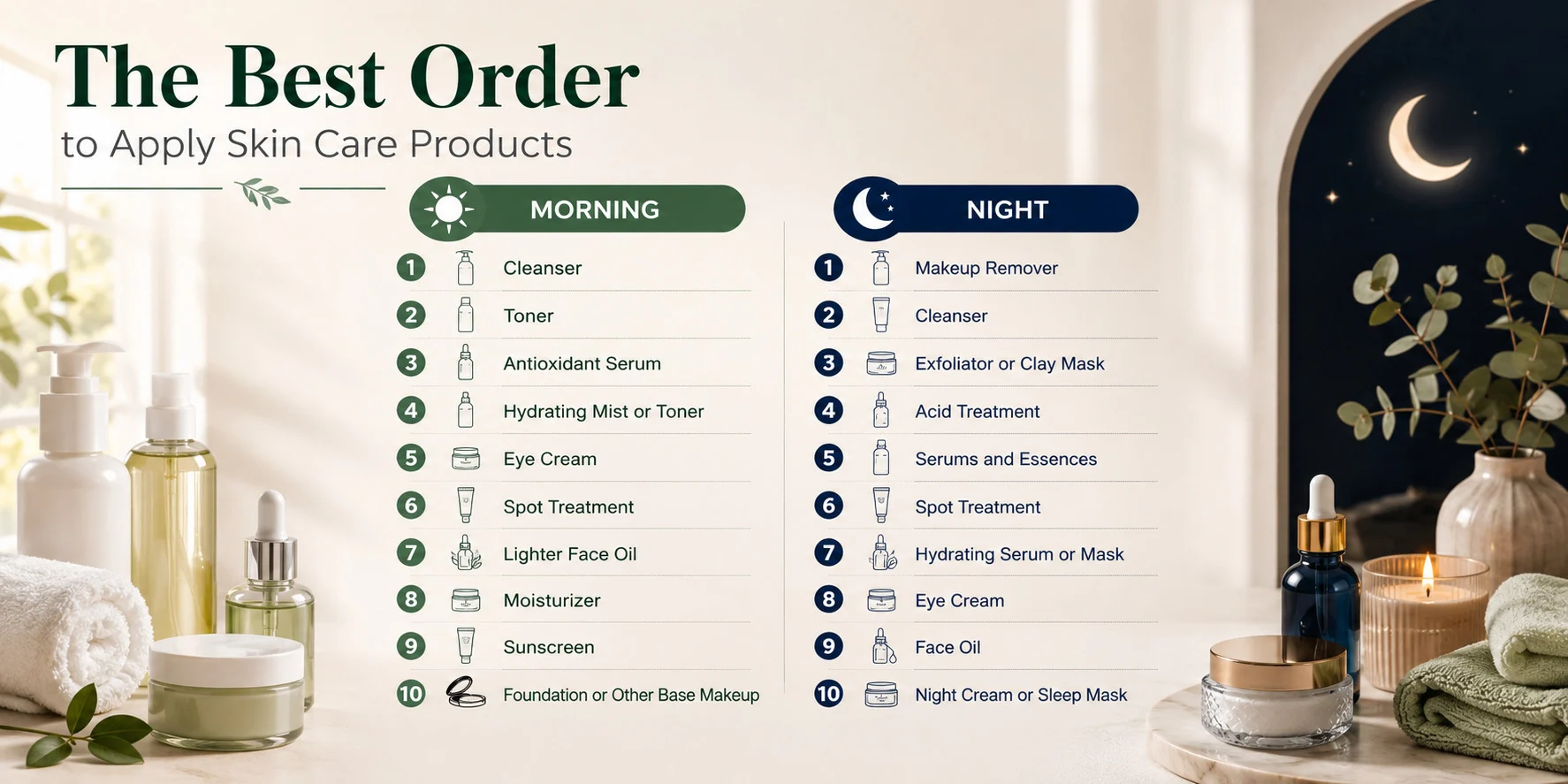
The Ideal Morning Skin Care Routine
A morning skin care routine centres on cleansing, maintaining hydration, and protecting the skin from ultraviolet radiation and environmental stress through the day.
Step 1: Gentle Cleanser
- Gel Cleanser: Removes excess oil and impurities without leaving a heavy residue, making it ideal for oily and acne-prone skin.
- Cream or Hydrating Cleanser: Cleanses the skin while maintaining moisture, making it suitable for dry or dehydrated skin.
- Mild Cleanser: Uses gentle cleansing agents that minimise irritation and help preserve the skin barrier in sensitive skin.
Step 2: Antioxidant Serum
- Vitamin C: Protects the skin from free radical damage while improving overall skin radiance.
- Ferulic Acid: Enhances the stability and effectiveness of antioxidant formulations, particularly when combined with vitamin C.
- Vitamin E: Provides additional antioxidant protection while supporting skin hydration.
Step 3: Moisturiser
- Lightweight Gel Moisturiser: Delivers hydration without feeling greasy, making it well suited to oily and combination skin.
- Ceramide-Based Moisturiser: Replenishes essential skin lipids to strengthen the skin barrier and reduce moisture loss.
- Hyaluronic Acid Moisturiser: Attracts and retains water within the skin to improve hydration.
Step 4: Sunscreen
- Broad-Spectrum SPF 30 or Higher: Protects the skin against both UVA and UVB rays responsible for sun damage.
- PA+++ or Above: Provides high UVA protection to help reduce pigmentation and premature skin ageing.
- Reapply Every 2-3 Hours: Reapplication is essential to maintain effective sun protection during prolonged outdoor exposure.
Based on Skin Concern
- Niacinamide Serum: Helps regulate excess oil production while improving uneven skin tone and supporting the skin barrier.
- Eye Cream: Hydrates the delicate eye area and addresses concerns such as dryness, puffiness, or fine lines.
- Lip Balm with SPF: Protects the lips from sun damage while preventing dryness and chapping.
The Ideal Night Skin Care Routine
A night skin care routine focuses on removing the day’s buildup, supporting the skin barrier, and applying treatment ingredients that work with the skin’s natural overnight repair process.
Step 1: Remove Makeup & Sunscreen
- Micellar Water: Lifts away makeup, sunscreen, and surface impurities without requiring harsh rubbing.
- Cleansing Balm: Melts away long-wearing makeup and sunscreen while leaving the skin feeling comfortable.
- Cleansing Oil: Dissolves oil-based impurities and rinses away easily without disrupting the skin barrier.
Step 2: Gentle Cleanser
- Gel Cleanser: Removes any remaining oil and impurities, making it suitable for oily and acne-prone skin.
- Hydrating Cleanser: Cleanses while maintaining skin moisture, making it ideal for dry or dehydrated skin.
- Cream Cleanser: Provides a gentle cleanse that supports the skin barrier and minimises dryness.
Step 3: Treatment Products
- Retinol/Retinoids: Increase skin cell turnover to improve fine lines, uneven texture, and acne.
- Niacinamide: Helps control excess oil, reduce pigmentation, and strengthen the skin barrier.
- Salicylic Acid: Penetrates pores to reduce excess oil and manage acne breakouts.
- Glycolic Acid: Exfoliates the skin surface to improve dullness and uneven texture.
- Azelaic Acid: Helps reduce pigmentation, redness, and blemishes while being suitable for many sensitive skin types.
- Peptides: Support the skin’s natural repair process and improve barrier function.
Step 4: Moisturiser
- Ceramide Moisturiser: Restores essential lipids that strengthen the skin barrier overnight.
- Barrier Repair Moisturiser: Reduces overnight moisture loss while supporting skin recovery.
- Overnight Hydrating Cream: Provides long-lasting hydration for dry and dehydrated skin.
Additional Treatments (When Required)
- Eye Cream: Provides targeted hydration for the delicate skin around the eyes.
- Lip Sleeping Mask: Deeply moisturises the lips overnight to reduce dryness and cracking.
- Prescription Skincare: Should only be used under the guidance of a dermatologist to ensure safe and appropriate treatment.
Morning vs Night: Which Products Work Best?
Morning and evening routines can share the same broad steps, but which products get used, and why, differs according to the skin’s biological activity at each point in the cycle.
| Step | Morning Routine | Night Routine |
| Cleansing | Removes overnight oil and sweat | Removes sunscreen, makeup, and environmental impurities |
| Active treatment | Antioxidants to reduce oxidative stress | Targeted treatment for acne, pigmentation, or ageing |
| Moisturising | Lightweight hydration for daytime comfort | Richer moisturisers to reduce overnight moisture loss |
| Protection/Repair | Sunscreen to protect against UV exposure | Barrier repair products to aid overnight recovery |
| Formulation purpose | Products selected for daytime wear under makeup | Products that remain active on skin over several hours |
How to Build a Skin Care Routine Based on Your Skin Type
Oily Skin
Sebum control matters most here, without stripping the barrier in the process. Lightweight, non-comedogenic formulas containing niacinamide or salicylic acid tend to work well.
Dry Skin
The priority shifts toward reducing transepidermal water loss and rebuilding barrier function. Gentle cleansers, ceramide-rich moisturisers, and humectants such as hyaluronic acid are the usual recommendations.
Combination Skin
Oiliness in the T-zone needs managing while drier areas still need hydration, which often calls for different products across different parts of the face rather than one formula throughout.
Sensitive Skin
Fewer active ingredients tend to work better here, fragrance-free, low-irritant formulations, with new products introduced gradually to limit the risk of irritation.
Acne-Prone Skin
Salicylic acid, retinoids, or benzoyl peroxide are the common choices, selected based on severity, with treatment adjusted to clear breakouts without compromising the skin barrier.
Regardless of skin type, product choice and ingredient strength should be tailored to the individual rather than following one standard routine.
Common Skin Care Mistakes That Can Do More Harm Than Good
- Over-Cleansing the Skin
- Skipping Sunscreen
- Using Too Many Active Ingredients Together
- Frequently Changing Skincare Products
- Over-Exfoliating
- Following Skincare Trends Without Understanding Your Skin
- Ignoring Seasonal Changes and Environmental Factors
When Should You See a Dermatologist?
A good routine keeps skin healthy day to day, but some concerns need professional evaluation. Persistent acne, pigmentation, rosacea, eczema, unexplained irritation, premature ageing, or products that simply aren’t working are worth having assessed by a dermatologist in India. Rather than relying on trial and error, a consultation with an experienced dermatologist such as Dr. Rinky Kapoor can identify the underlying cause and build a routine around your skin type, clinical condition, and lifestyle.
Why a Personalized Skin Care Routine Delivers Better Results
Skin type, age, hormonal changes, climate, lifestyle, and existing skin conditions all shape which products, and which active ingredient concentrations, actually make sense for a given person. A professional skin assessment helps avoid products that don’t suit the skin while matching treatment to what it actually needs. Small, consistent adjustments over time tend to outperform frequently switching products or chasing skincare trends.
Conclusion
There’s no universal “best” routine, only the one that’s actually right for your skin, not whatever’s trending or has the most products attached to it. A well-planned morning routine does its job by shielding skin from the day’s environmental stress. Night is different; that’s when repair and targeted treatment take over. Choose products based on skin type, real concerns, and how the seasons shift, then stick with that routine, and it’ll generally outperform whatever gets switched out every few weeks chasing the next trend.
Dr. Rinky Kapoor works with patients from Mumbai and across India to build routines that are genuinely personalised, dermatologist-guided, and shaped around what that individual’s skin actually needs, aimed at real, long-term skin health rather than a quick fix.
FAQs
How long should I wait between applying different skincare products?
Allow each product to absorb for about 30–60 seconds before applying the next one, although prescription products may require specific instructions.
Is it necessary to use the same cleanser in the morning and at night?
Not always. A gentle cleanser is usually sufficient in the morning, while a double cleanse may be preferred at night if you wear makeup or sunscreen.
Can I skip moisturizer if I have oily skin?
No. Oily skin still requires moisturisation, but lightweight, non-comedogenic formulations are generally more suitable.
Should I change my skincare routine during different seasons?
Yes. Seasonal changes in temperature and humidity may require adjustments in cleansers, moisturisers, and sun protection.
At what age should I start using anti-ageing skincare products?
Preventive skincare may begin in the mid-20s, but active ingredients such as retinoids should be selected according to individual skin concerns rather than age alone.
How long does it usually take to see visible results from a new skincare routine?
Most skincare products require 6-12 weeks of consistent use before noticeable improvements become evident, although this varies depending on the skin concern and the ingredients used.