Key Takeaways
- Dark marks after acne are usually pigmentation, not scars.
- Picking, repeated breakouts, and sun exposure can make the marks last longer.
- Treat acne early and wear sunscreen daily.
- See a dermatologist if a mark has not faded in a few months.
Pimple marks can be stubborn. Many people deal with this and assume it’s a scar. Usually, it’s post-acne pigmentation: the skin has changed colour, but it still feels smooth. The good news is that you can prevent it from happening. Calm the inflammation early, don’t pick, and avoid direct sun exposure.
In this article, we cover why the marks appear, how to prevent them, and what to do once you have them. When they refuse to fade, Dr. Rinky Kapoor, a dermatologist at TEC® (The Esthetic Clinics), can help with both the acne and the pigmentation.
Why Does Acne Leave Dark Spots?
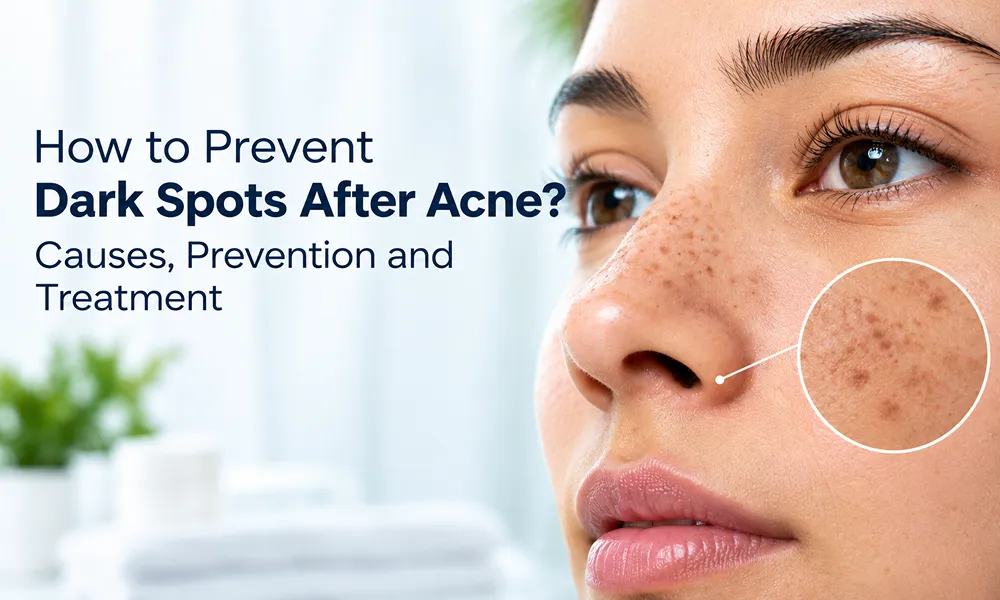
What causes dark spots on the face from acne? Think of a pimple as a small injury. The skin around it swells and gets irritated, and in response, it produces extra melanin. That’s the brown pigment. Once the pimple heals, the melanin stays. Doctors call the result post-inflammatory hyperpigmentation, or PIH.
Squeezing makes it worse because it adds more irritation to an already inflamed spot. The sun makes it worse, too, and in a city like Mumbai, most of us are exposed to it daily.
A dark spot is not an acne scar. The spot is the dark colour left behind after the pimple is gone. A scar is about texture, such as a dent or a raised patch. People use the two words interchangeably all the time, but the treatment differs. For true scarring, see our page on face scar treatment.
How to Prevent Dark Spots After Pimples
Start with acne: If it keeps flaring, your skin stays inflamed, and each breakout risks leaving another mark. Getting proper acne treatment early is the best protection. Don’t wait for it to get severe.
Don’t pick: We know it’s tempting, especially with a whitehead on the chin before an event. But picking breaks the skin, and a broken, inflamed spot is exactly the kind that leaves a mark.
Wear sunscreen every day: UV light darkens pigmentation and slows its fading. Pick a broad-spectrum sunscreen that suits acne-prone skin, and reapply it if you’re outside for a long time.
Keep the routine simple: Harsh scrubs, over-exfoliation, or starting three new active products at once can irritate the skin and cause more marks. Avoid home remedies such as lemon juice or toothpaste. They tend to irritate the skin further.
Lastly, don’t ignore acne that keeps coming back. Every new breakout is another chance for a mark, so get it assessed instead of trying product after product.
How to Fade Dark Spots From Acne
Already have marks? First, ensure your acne is under control so that new breakouts do not occur. Keep using your sunscreen. Do not change a product or routine that you know your skin agrees with every week. Some marks will go away even without treatment, given enough time.
For marks that persist, a dermatologist can help. Treatment may involve pigment-targeted topical agents, prescription medications, chemical peels, and laser or light therapies, if needed. The choice depends on your skin type, the depth of pigmentation, the presence of active acne, and how long the pigmentation has been present.
Dr. Rinky Kapoor at The Esthetic Clinics will determine whether the marks are pigmentation or actual scarring, then suggest a treatment plan suited to your skin. You can learn more about this in our blog on how to get rid of dark spots on your face.
When Should You See a Dermatologist for Acne Dark Spots?
Don’t wait too long. Consult a dermatologist if the spots are spreading even though your acne is improving, or if every breakout leaves a new mark. Seek help if the pigmentation is widespread or persistent, home care isn’t working, you also have depressed or raised scars, or you can’t identify the type of mark.
Treating acne and pigmentation together matters because each new breakout can leave another mark. If you’re looking for acne treatment in Mumbai, that’s a sensible way to begin. You can also consult a dermatologist at the clinic.
FAQs on How to Prevent Draft Spots After Acne
Do acne dark spots go away on their own?
Yes, acne dark spots often fade on their own, but the process can take several months. Older or deeper marks may take longer to clear and may need treatment recommended by a dermatologist.
How long do dark spots after acne take to fade?
Mild dark spots may start fading within a few months, depending on your skin and skincare routine. Deeper pigmentation can take longer, especially if new pimples keep appearing in the same area.
Does sunscreen help fade acne dark spots?
Yes, sunscreen helps prevent sunlight from making acne marks darker and more noticeable. Using a broad-spectrum SPF 30 or higher every day can support the skin’s natural fading process.
Can I use vitamin C for acne dark spots?
Vitamin C may help reduce the appearance of dark spots and improve uneven skin tone over time. Choose a suitable product, patch-test it before regular use, and stop using it if irritation develops.
Are acne dark spots the same as acne scars?
No, acne dark spots affect the colour of your skin, while acne scars usually involve changes in skin texture. Flat brown or red marks often fade gradually, but indented or raised scars may require professional treatment.
Does popping pimples cause dark spots?
Yes, squeezing or picking pimples can increase inflammation and raise the risk of dark spots after acne. It may also damage the skin and increase the chances of developing permanent scars.
Why do my acne marks keep getting darker?
Frequent breakouts, picking at pimples, sun exposure, and irritating skincare products can make acne marks darker. Using gentle skincare, avoiding unnecessary scrubbing, and applying sunscreen daily can help prevent further pigmentation.