Key Takeaways:
- FUE involves extracting and transplanting individual follicular units from a suitable donor area.
- Follicular unit structure, hair direction, and graft placement are important for a natural-looking result.
- FUE and FUT differ mainly in how donor grafts are harvested and the type of scarring involved.
- Suitability depends on the cause and pattern of hair loss, donor density, and individual characteristics.
- A professional assessment is essential before deciding on hair transplantation.
Follicular Unit Extraction (FUE) is a hair restoration technique in which individual follicular units are taken from a suitable donor area and moved to areas affected by hair loss. Each follicular unit may hold one or several hair follicles grouped closely together, which reflects the way scalp hair is naturally organised.
The result of an FUE hair transplant depends on far more than extracting grafts. Donor-hair characteristics and the quality of each follicular unit play an important part, and so does careful planning of the recipient sites. Hair direction, angulation, and the overall spread of grafts all affect how naturally the transplanted hair blends with existing hair. For this reason, the pattern & cause of hair loss need to be assessed in detail before transplantation is considered. Dr. Rinky Kapoor evaluates these factors individually when determining if FUE is an appropriate option.
What Is a Follicular Unit in Hair Transplantation?
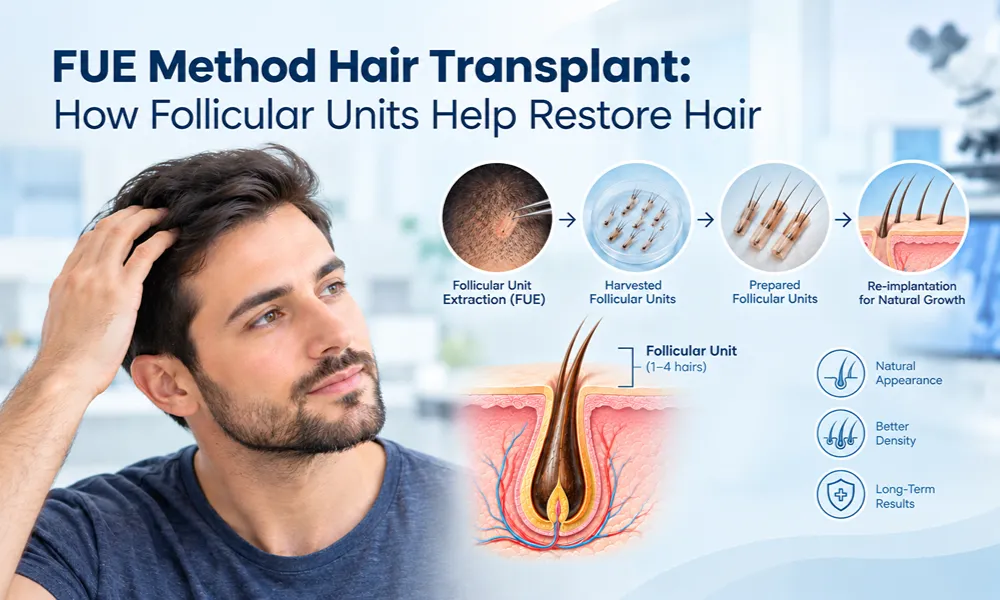
A follicular unit is a natural grouping of hair follicles within the scalp, typically containing one to four closely associated follicles along with supporting structures. In hair transplantation, these groups are harvested as individual grafts and repositioned while preserving their natural arrangement.
Maintaining this structure helps achieve a natural distribution of transplanted hair. Single-hair units can be used along the frontal hairline, while larger units can provide density behind it, allowing graft placement to follow the scalp’s natural growth pattern.
How Does the FUE Hair Transplant Method Work?
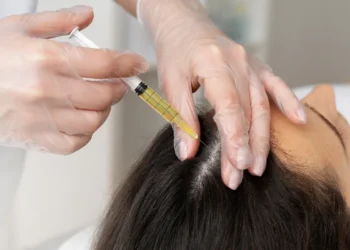
FUE involves the individual harvesting of follicular units from the donor area and their subsequent implantation into pre-planned recipient sites. The procedure generally comprises the following stages:
- Donor-area assessment: The donor area is evaluated to determine hair density, follicular characteristics and the quantity of suitable hair available for transplantation.
- Follicular unit extraction: Individual grafts are removed using a fine punch instrument, with particular attention to minimising trauma to the surrounding tissue.
- Graft preparation: Extracted follicular units are examined under magnification, sorted and stored in an appropriate solution prior to implantation.
- Recipient-area planning: Graft placement is determined with reference to the hairline design, the density of existing hair and its natural direction of growth.
- Follicular unit placement: Grafts are implanted at angles and orientations consistent with the surrounding hair, enabling them to integrate with existing hair and achieve a natural appearance.
Why Are Follicular Units Important for Natural-Looking Results?
Human hair grows in small natural clusters of one to four hairs, known as follicular units. Preserving these units during a transplant is essential to achieving a result that resembles the patient’s original hair.
The surgeon assesses the angle, direction and density of existing hair, and each graft is positioned accordingly. Single-hair units are placed along the frontal hairline, where natural hair is finer and less uniform. Units containing two to four hairs are positioned behind this area to provide density.
The characteristics of the donor hair also influence the outcome. Coarse or curly hair provides greater coverage than fine, straight hair, which affects both the number of grafts required and their distribution across the scalp.
FUE vs FUT Hair Transplant: What Is the Difference?
Both FUE and FUT move follicular units from the donor area to thinning or bald regions of the scalp. The difference lies in how those units are removed.
| Factor | FUE | FUT |
| Extraction method | Follicular units are taken out one at a time using a small circular punch. | A narrow strip of scalp is removed from the back of the head, then dissected into follicular units under magnification. |
| Donor-area scarring | Leaves tiny dot-shaped scars spread across the donor area, which are generally hard to see with short hair. | Leaves a single linear scar, usually concealed by surrounding hair unless it is cut very short. |
| Graft harvesting | Each graft is collected separately, which can lengthen the procedure for larger sessions. | A single strip can yield a large number of grafts in one session. |
| Typical candidates | Patients who prefer to wear their hair short or who need a moderate number of grafts. | Patients who require a high graft count or whose donor hair is better suited to strip harvesting. |
Neither method suits every patient. The choice depends on the extent and pattern of hair loss, donor density, scalp laxity, the number of grafts needed, and the overall treatment plan.
Who May Be Suitable for an FUE Hair Transplant?
FUE is generally suited to patients whose hair loss has stabilised and who have enough healthy follicles in the donor area. The doctor will assess the extent and pattern of thinning, donor density and hair quality to judge whether sufficient grafts are available.
Hair loss that is still progressing or has no clear cause should be investigated first, as medical treatment may be more appropriate. A consultation with a qualified hair transplant doctor confirms suitability and sets realistic expectations for the result.
What Can You Expect After an FUE Hair Transplant?
Redness, mild swelling, and tenderness are common in the treated areas for several days, and the small crusts around each graft usually come away within two weeks. Most transplanted hairs fall out between the second and sixth week, but the follicles stay in the scalp and begin producing new hair after a resting period.
Regrowth generally starts at three to four months, with the full result visible at 12 to 18 months. Following the doctor’s aftercare instructions and attending scheduled reviews helps the grafts heal and grow well.
Choosing an FUE Hair Transplant Clinic in Mumbai
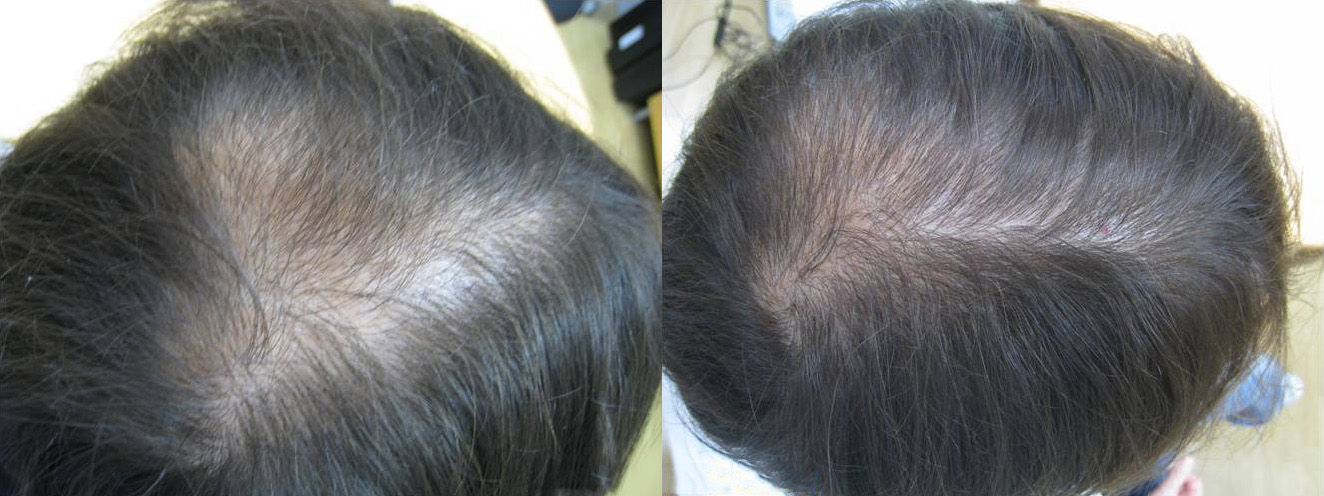
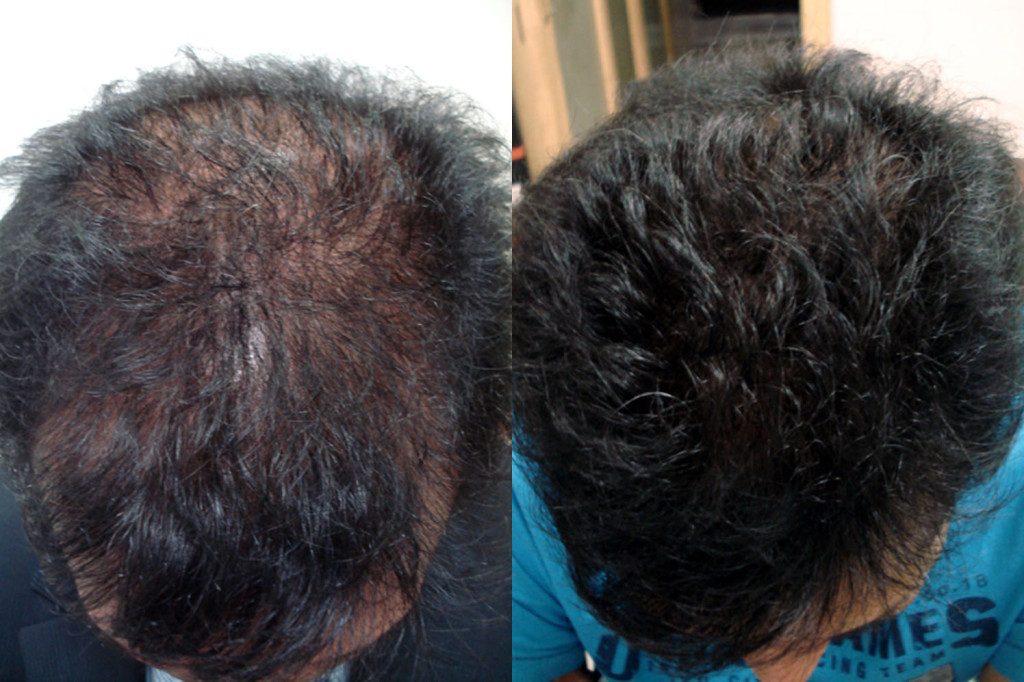
The cost of a procedure is not a reliable measure of its quality. When evaluating a hair transplant clinic in Mumbai, patients should confirm the surgeon’s qualifications, their experience with comparable cases, and how the graft count has been determined, and should review before-and-after results from patients with a similar degree of hair loss.
A follicular hair transplant in Mumbai should also include structured follow-up until regrowth is complete, and for those considering an FUE hair transplant in Mumbai, a detailed consultation confirms whether the technique and graft plan suit the individual case.
Is Hair Transplant the Only Option for Hair Loss?
Surgery is only one of several ways to manage hair loss, and it is not always the first. Where thinning results from hormonal imbalance, iron or vitamin deficiency, a scalp disorder or active shedding, the cause should be treated before a transplant is considered. Options may include medication, PRP therapy or dietary correction, depending on the diagnosis. A clinical assessment will indicate whether transplantation is suitable.
Final Thoughts
FUE transfers naturally occurring follicular units from a suitable donor area to regions affected by hair loss. The quality of the donor hair, graft handling, hairline design, placement and overall treatment planning all influence the final result. A proper assessment of the cause and pattern of hair loss should therefore come before deciding on transplantation. Dr. Rinky Kapoor can assess your individual hair-loss pattern and discuss whether FUE or another treatment approach is appropriate.
FAQs About FUE Hair Transplant
What is the FUE method hair transplant?
FUE, or Follicular Unit Extraction, is a hair transplant technique in which individual follicular units are extracted from a suitable donor area and implanted into areas affected by hair loss.
What is a follicular unit in hair transplantation?
A follicular unit is a naturally occurring group of one or more hair follicles within the scalp. These units are harvested and transplanted while maintaining their natural arrangement.
How is FUE different from FUT?
FUE involves extracting individual follicular units directly from the scalp, while FUT involves removing a strip of donor scalp & separating it into individual follicular units. The two techniques differ in their method of graft harvesting & donor-area scarring.
Is FUE suitable for everyone with hair loss?
No. Suitability depends on the cause and pattern of hair loss, donor-hair density, scalp characteristics, and the number of grafts required. A professional assessment is needed before deciding on transplantation.
When does hair start growing after FUE?
Transplanted hair typically goes through an initial healing and shedding phase before new growth develops. Hair growth is gradual, so the outcome should be assessed over time rather than immediately after the procedure.
Does FUE leave visible scars?
FUE generally leaves small, scattered scars at the extraction sites rather than the linear scar associated with FUT. Their visibility can vary depending on the extraction technique, healing response, hair characteristics and how short the hair is worn.
How do I choose the right hair transplant doctor?
Consider the doctor’s qualifications and experience, approach to donor-area assessment, treatment planning, relevant before-and-after results, and follow-up care. A detailed consultation should also establish whether transplantation is appropriate for your particular pattern and cause of hair loss.