Key Takeaways:
- Laser hair removal uses the principle of selective photothermolysis to target melanin within the hair follicle, achieving long-term hair reduction.
- Multiple treatment sessions are required because only hair follicles in the anagen (active growth) phase respond effectively to laser energy.
- Treatment outcomes are influenced by factors such as skin phototype, hair colour, hair thickness, hormonal status, and adherence to the recommended treatment schedule.
- Choosing an experienced dermatologist in Mumbai and the best clinic for laser hair removal with appropriate laser technology is essential for safe, personalised, and effective treatment.
Laser hair removal in India works on a fundamental biological principle: only hair follicles in the anagen (active growth) phase contain enough melanin to effectively absorb laser energy. Since not all follicles are in this phase at the same time, multiple sessions are required to achieve long-term hair reduction.
Although the term permanent laser hair removal is widely used, it refers to long-lasting hair reduction rather than the complete removal of every hair follicle. Treatment outcomes depend on factors such as hair colour, skin phototype, hormonal influences, and the laser technology used. In this guide, Dr. Rinky Kapoor, the best dermatologist in Mumbai and across India, explains how laser hair removal works, what influences its results, and what to expect throughout the treatment journey.
What Is Laser Hair Removal?
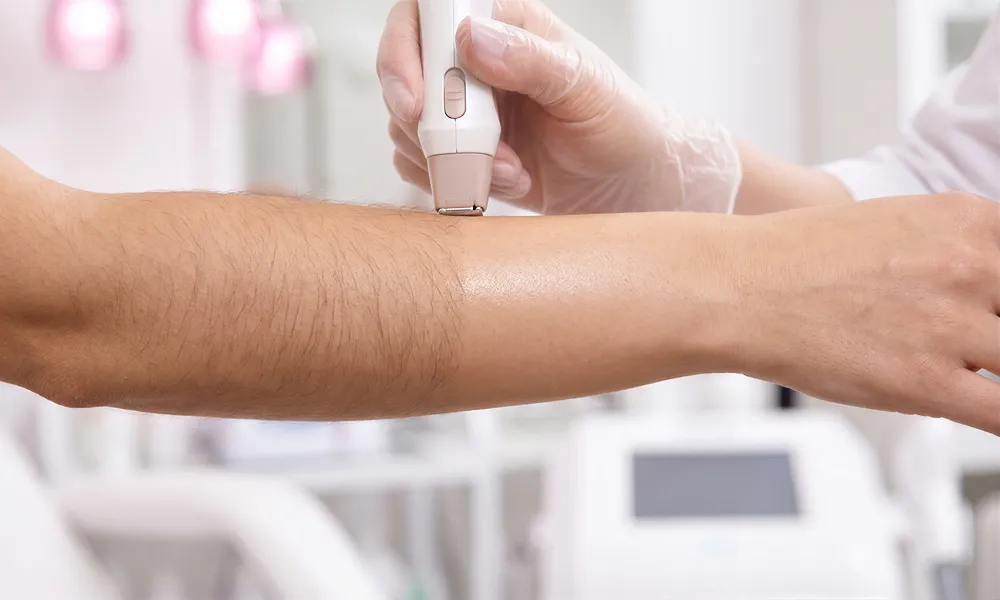
Laser hair removal is a dermatologist-performed procedure that uses controlled laser energy to achieve long-term reduction of unwanted hair. Unlike temporary methods such as shaving or waxing, it targets the hair follicle rather than the visible hair shaft. Treatment is individualised according to factors such as skin phototype, hair characteristics, and the area being treated to optimise both safety and clinical outcomes.
How Laser Technology Targets Hair Follicles
Laser hair removal is based on the principle of selective photothermolysis, where melanin within the hair shaft absorbs a specific wavelength of light and converts it into heat. This thermal energy reaches the hair follicle, reducing its ability to produce new hair while largely preserving the surrounding skin. Treatment is most effective during the anagen (active growth) phase, when the hair remains attached to the follicle and contains the highest concentration of melanin. As only a proportion of follicles are in this phase during any treatment session, multiple sessions are required to achieve long-term hair reduction.
Is Laser Hair Removal the Right Choice for You?
Both men and women consider laser hair removal for long-term reduction of unwanted facial or body hair. Modern laser systems can treat a wide range of skin phototypes, though the outcome still comes down to other things too; hair colour, hair thickness, hormonal status, and genetics all play a part. A consultation helps work out whether the treatment actually suits a person’s skin and hair profile.
Factors That Influence Results
Not everyone sees the same results from laser hair removal. Dark, coarse hair tends to respond best, since it holds more melanin, and skin tone factors into which laser and settings get chosen. Hormonal conditions like PCOS, genetics, and a person’s own hair growth pattern can shift outcomes, too. Sticking to the recommended schedule matters just as much as any of that, because treatment only works well when follicles are caught in their active growth phase.
Which Areas Can Be Treated for Laser Hair Removal Treatment in India?
Most areas of the face and body respond to laser hair removal, provided unwanted terminal hair is present there. The treatment protocol isn’t fixed. It shifts with the site being treated, hair density, skin phototype, and the specific characteristics of the hair itself.
Facial Areas
The upper lip, chin, sideburns, and jawline are the areas where facial laser hair removal is used most. These spots often carry persistent, sometimes hormonally driven hair growth, a pattern seen more often in people with PCOS. Facial skin brings its own challenges too: it’s more sensitive than skin elsewhere, and hair density can swing considerably from one patient to the next.
Body Areas
The underarms, arms, legs, bikini line, back, chest, and abdomen make up the areas treated most commonly. Hair on larger body areas tends to be thicker, and thicker, terminal hair generally responds well to laser treatment, since it carries more melanin. There’s a secondary benefit too, beyond hair reduction itself: treatment can ease the ingrown hairs and pseudofolliculitis that often come with repeated shaving or waxing.
Is Full-Body Laser Hair Removal Worth It?
Full-body laser hair removal gives people seeking hair reduction across several body areas a convenient, structured option. Hair distribution, skin type, and clinical assessment all feed into each treatment plan, which is what allows sessions to run safely while keeping the treatment parameters consistent from one area to the next.
How to Prepare for Your First Laser Hair Removal Session in Mumbai?
Before treatment even starts, there’s a clinical assessment to work through, and it’s not just a formality. What gets decided there, which treatment parameters suit that particular patient, has a direct bearing on how effective the laser will be and how the skin holds up afterward.
Before Your Appointment
A review takes place first, covering medical history, skin phototype, hair characteristics, any previous hair removal methods, and dermatological or hormonal conditions. A patch test may follow, mainly to check skin response and set the laser accordingly.
Preparing Your Skin for Treatment
Shave the area 24 hours ahead of the session. Waxing, threading, and plucking should stop at least four weeks before, since these strip away the hair shaft the laser needs to work with. Sun exposure, tanning, and irritating products like retinoids or exfoliating acids are best avoided in this window too.
What Happens During a Laser Hair Removal Treatment?
A laser hair removal session follows a structured clinical protocol, one designed with both safety and treatment efficacy in mind.
- Skin Preparation: The treatment area is cleansed first, removing makeup, sunscreen, oils, or any other topical product that might interfere with laser delivery.
- Eye Protection: Both patient and treating professional wear protective eyewear throughout, shielding the eyes from laser exposure.
- Laser Parameter Selection: Laser settings are adjusted before treatment begins, calibrated to the treatment area, skin phototype, hair thickness, and hair colour, so follicular targeting is as accurate as possible.
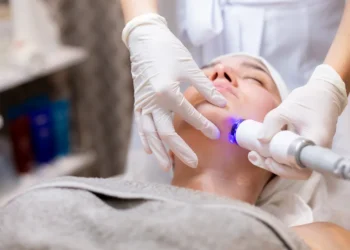
- Laser Application: Controlled pulses of laser energy are delivered across the treatment area. The laser targets melanin within the hair shaft specifically, allowing heat to reach the follicle while keeping injury to the surrounding skin to a minimum.
- Cooling & Skin Protection: Most advanced laser systems now build in cooling technology, which improves comfort and protects the epidermis as treatment proceeds.
- Post-Treatment Assessment: Once the session ends, the treated skin is checked for the expected clinical response, aftercare instructions are given, and the next appointment gets scheduled.
Aftercare Tips for Better Results
Aftercare isn’t optional here, it’s part of what actually determines the result. Skin needs the chance to recover properly, and doing that right after treatment tends to pay off later. A bit of redness, or some perifollicular swelling, right after the session is completely normal. Most of the time it settles within a few hours on its own.
The First 48 Hours
Skip hot showers for now. Same goes for excessive heat, strenuous exercise, and direct sun, all of them tend to push up skin sensitivity right when it’s already elevated. If the area feels irritated, a cool compress works well, or a gentle moisturiser if that’s easier to reach for.
Long-Term Aftercare
Sunscreen matters more than people expect here, broad-spectrum, applied to any exposed treated area, alongside a gentle skincare routine until things have properly settled. Shaving’s fine in between sessions. Waxing, threading, plucking, though, those need to wait, they pull out the very hair the laser needs to target next time round.
What Are the Common Myths About Permanent Laser Hair Removal Treatment in India?
Myth 1: Laser Hair Removal Removes Every Hair Forever
Laser hair removal delivers long-term hair reduction, not permanent removal of every follicle. Most treated follicles stop producing hair, or produce very little, once treatment is done. Hormonal changes and individual biology, though, can still bring a degree of regrowth over time.
Myth 2: It Works the Same for Everyone
Outcomes aren’t the same for every patient. Hair colour, skin phototype, hormonal status, genetics, and how closely someone sticks to the treatment schedule, all of it shapes the result. That’s exactly why a personalised plan tends to work better than a generic one applied across the board.
Myth 3: It Is Unsafe for Darker Skin
This concern is leftover thinking from older laser technology, not how things stand now. Modern systems treat darker skin tones safely, provided an experienced dermatologist selects the right wavelength and settings. A thorough skin assessment beforehand is what actually makes that possible.
Myth 4: One Session Is Enough
Basic hair biology says otherwise. Follicles don’t all sit in the active growth, or anagen, phase at the same time, so multiple sessions are needed to catch each one as it cycles into that responsive window.
Myth 5: It Causes Thicker Hair Growth
It’s closer to the reverse, actually. Laser treatment doesn’t thicken existing hair. Across sessions, hair typically grows back finer, lighter, and less dense, though how much varies from person to person.
How to Choose the Best Laser Hair Removal Clinic in Mumbai?
Choosing the best laser hair removal clinic in Mumbai involves more than access to advanced laser technology. A comprehensive clinical assessment, accurate evaluation of skin phototype, appropriate laser selection, and individualised treatment parameters are all essential for achieving safe, predictable outcomes. Consulting an experienced dermatologist such as Dr. Rinky Kapoor at TEC® ensures the treatment protocol is tailored to a patient’s skin type, hair characteristics, and clinical indications, while maintaining the highest standards of patient safety.
Final Thoughts
Laser hair removal is an evidence-based procedure that offers long-term hair reduction when performed with appropriate laser technology and a personalised treatment protocol. Treatment outcomes depend on factors such as skin phototype, hair characteristics, and the hair growth cycle, which is why a detailed clinical assessment is essential before starting treatment. Consulting an experienced dermatologist in Mumbai such as Dr. Rinky Kapoor helps ensure the treatment plan is tailored to individual needs, with realistic expectations, optimal safety, and predictable clinical outcomes.
FAQs
Is permanent laser hair removal really permanent?
Not entirely. What it actually delivers is long-term reduction, by limiting how well treated follicles can produce new hair. Hormonal changes and individual biology can still bring some regrowth over time, which is why occasional maintenance sessions often help.
How many laser hair removal sessions are usually needed?
That depends on the treatment area, hair density, skin phototype, and the hair growth cycle. Most people need several sessions, since only follicles in the anagen, or active growth, phase actually respond to treatment.
Does laser hair removal work on all skin types?
Yes. Modern laser platforms can treat a wide range of skin phototypes safely, provided the right wavelength and settings are chosen following a proper clinical assessment.
Can men undergo laser hair removal treatment?
Yes. It’s commonly done for men wanting long-term hair reduction on areas like the beard line, chest, back, shoulders, and abdomen.
Is laser hair removal safe for sensitive skin?
Generally, yes, when an experienced dermatologist is performing it. Even sensitive skin tends to tolerate it well, since treatment settings get adjusted based on skin type and clinical findings to keep adverse effects to a minimum.
Can I shave between laser hair removal sessions?
Yes, and it’s actually the preferred method between sessions, since it clears hair from the surface without disturbing the follicle underneath.
Is laser hair removal better than waxing?
Waxing only removes hair temporarily. Laser hair removal goes after the follicle directly, aiming for something longer lasting. Which one actually suits someone better comes down to their hair characteristics, skin type, and what they’re hoping to achieve.
How long do the results of laser hair removal last?
For many people, quite a while, once the recommended sessions are complete. Exactly how long depends on hormonal influences, genetics, and the treatment area, and some people choose occasional maintenance sessions to keep results going.
How do I choose the best laser hair removal treatment in Mumbai?
Look for dermatologist-led care, laser technology suited to the patient’s skin phototype, a personalised treatment plan, and solid safety protocols. A proper consultation is what determines the right approach based on individual clinical assessment.
Does laser hair removal hurt?
Most people describe it as a mild snapping or tingling sensation during the pulses. Modern systems with built-in cooling help keep this comfortable while protecting the skin around the treatment area.