Dandruff is a pain point for many people but these expert-recommended home remedies are good to cure and control dandruff.
DR RINKY KAPOOR
Key Takeaways:
- Dandruff can develop for different reasons: dryness, oil imbalance, sensitivity to products, or the presence of Malassezia on the scalp.
- Apple cider vinegar is often used to refresh the scalp and support its natural pH balance, especially when there is visible buildup.
- Coconut oil may help improve dryness and scalp comfort, though it does not suit every dandruff type.
- Aloe vera is commonly used for its soothing effect and may help calm irritation when the scalp feels itchy or reactive.
- Coconut oil with lemon juice is a popular home remedy. Lemon juice helps loosen flakes while coconut oil reduces dryness.
- Baking soda can work as a mild exfoliating step when there is noticeable build-up, but it is best used occasionally.
- Consistency usually matters more than trying multiple remedies together a stable routine tends to support the scalp better.
- If dandruff continues despite regular care, or is accompanied by redness, irritation, or hair fall, it may need evaluation by a dermatologist.
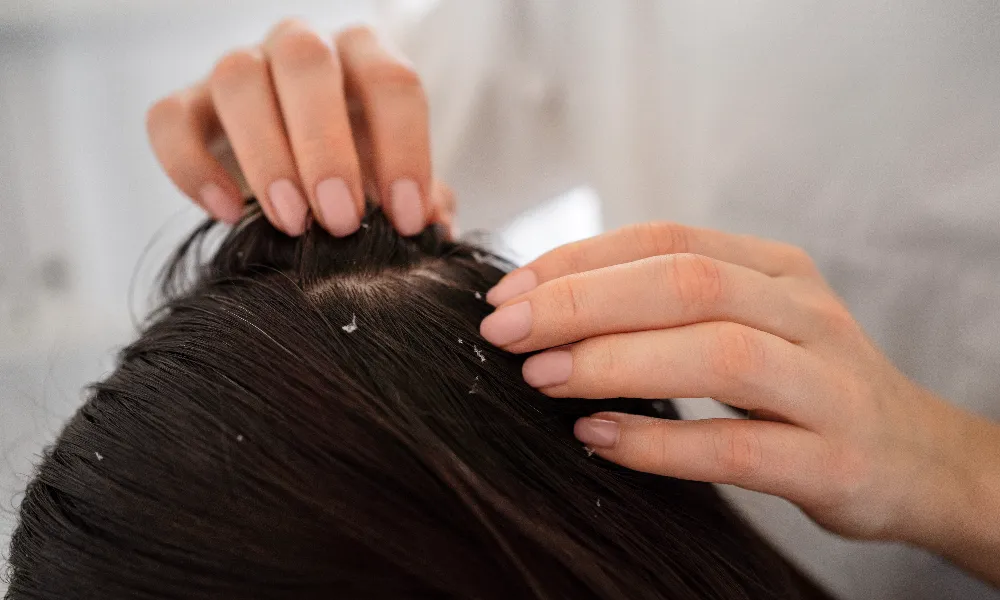
Most people ignore dandruff at the start. A few flakes don’t feel like a big deal. You switch shampoos, oil your hair for a few days, and expect it to settle. Sometimes it does. Sometimes it keeps coming back.
That’s when people start trying everything: anti-dandruff shampoos, DIY remedies, oils, scrubs, lemon, overnight masks, and changing routines constantly. The scalp ends up overloaded rather than helped.
The problem is, dandruff isn’t the same for everyone. One scalp may be oily, another already dry and irritated. Some deal with product build-up, others overwash trying to remove flakes. Even stress can trigger flare-ups.
That’s why quick fixes rarely last. While home remedies like aloe vera, coconut oil, apple cider vinegar, or lemon may help in mild cases, the scalp usually responds better when the routine becomes simpler, not more aggressive, a key part of effective scalp care.
Many treatments like tea tree oil, salicylic acid, zinc pyrithione, coal tar-based products, and certain anti-dandruff shampoos are widely suggested. However, not all of them are easily accessible or suitable for regular use.
This is where simple, practical dandruff treatments at home come in. Ingredients like coconut oil are easy to use and often preferred when dealing with white flakes, dryness, or mild scalp irritation.
Because of this, people often look for the best dandruff solutions that are easy to follow without immediately depending on medicated products.
Here, we will list 5 tried-and-tested homemade remedies that can help you get rid of dandruff or manage related concerns at home without relying on expensive treatments.
Here are some natural homemade dandruff treatments to get rid of dandruff.
Try these 5 dandruff home remedies at least once a week to control the issue:
1. Apple Cider Vinegar: A Natural Dandruff Solution for Scalp Balance
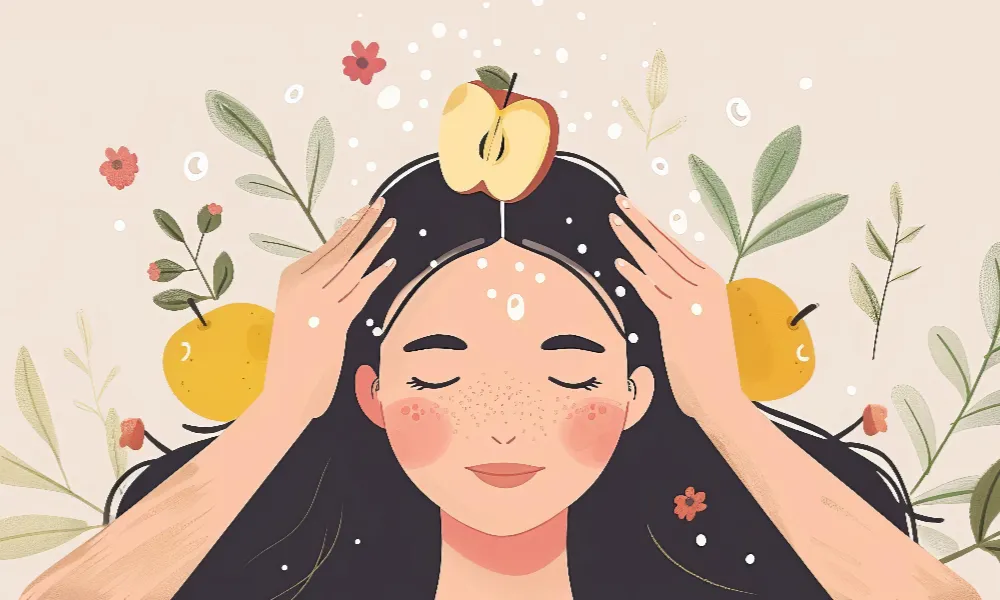
Benefits: Apple cider vinegar offers many health benefits and is often used as one of the best natural home remedies for dandruff. It is believed that the apple cider vinegar’s acidity could help normalise the shedding of dead skin cells. It is also used for balancing the pH of the scalp to reduce the growth of fungus and thus fight dandruff and provide some relief from scalp psoriasis. These claims are based on anecdotal evidence.
How to use: One can use apple cider vinegar by adding a few tablespoons to their shampoo or mix it with other essential oils and spray directly on the hair. Using equal parts of apple cider vinegar and water to massage the scalp before washing the hair is also a popular home remedy.
2. Coconut Oil Massage: The Best Home Remedy for Dry Scalp and Dandruff
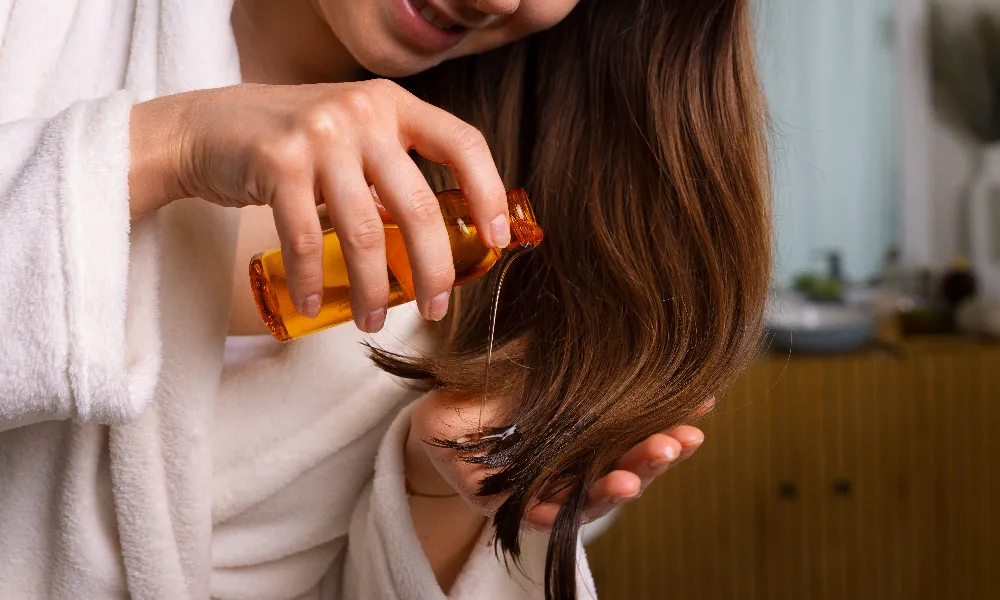
Benefits: Hair massages with coconut oil have been featured in our folk tales for centuries now. As we lean towards western culture, we might have questioned the benefits of coconut oil, but even the West is now confirming what our heritage has always emphasised. There is probably no hair oil as good as coconut oil. A dry scalp could be a reason for dandruff, coconut oil acts as a perfect moisturiser for both dry scalp and frizzy hair.
Other causes of flaking could be the growth of a fungus, seborrheic dermatitis, and scalp psoriasis. Coconut oil is known to have one of the best moisturising effects on hair and scalp it helps treat not only dandruff but dry scalp too.
How to use: Massaging your hair and scalp with warm coconut oil helps distributes the oil evenly, it moisturises the scalp. This, in turn, could help reduce dandruff. The coconut oil massage will also clear any kind of oil or dirt build-up on the scalp. After 30 minutes or more one can use any shampoo of choice to wash it off.
3. Aloe Vera for Dandruff: Antifungal Relief Directly from Nature
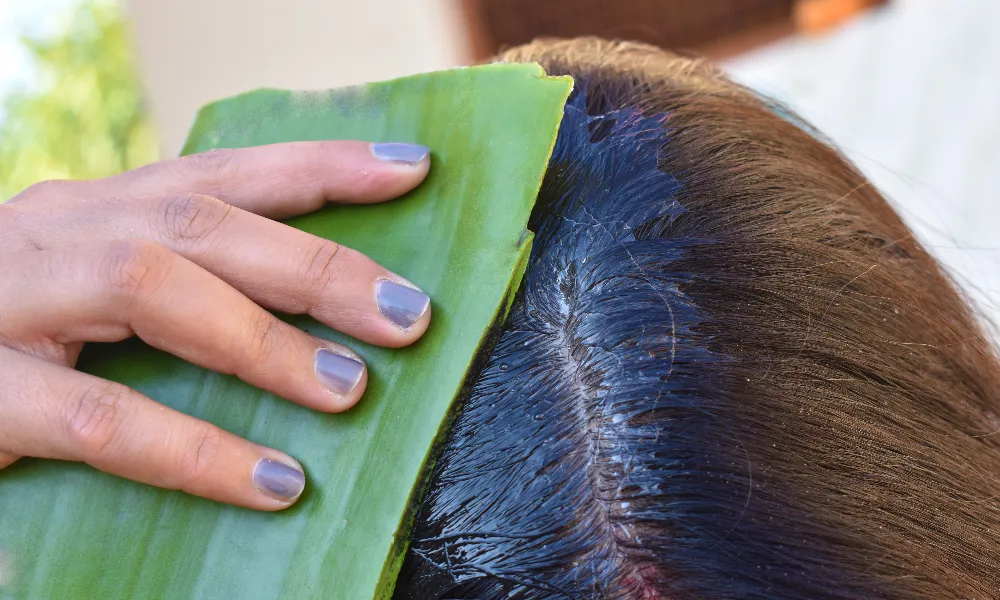
Benefits: Another popular homemade treatment involves aloe vera. The aloe vera plant and gel are often added as an ingredient in many skin ointments, cosmetics, and lotions. It is believed that aloe vera is great for hair and skin. When applied to the skin, aloe vera helps treat several skin conditions such as psoriasis, burns, and cold sores. It may also help treat dandruff.
The anti-fungal properties and antibacterial properties and of this plant could help reduce scalp inflammation and decrease dandruff symptoms. A study found that aloe vera is effective and could help control hair loss causing fungal infections.
How to use: After extracting the aloe vera gel from its leaves simply apply the gel to your hair and let it sit for 30 minutes to an hour. Use shampoo to wash your hair.
4. Coconut Oil and Lemon Juice: A Powerful Dandruff Treatment at Home
Benefits: The versatility of coconut oil is that it offers multiple hair benefits unlike any other oil, which provides overall nourishment that is lasting. Since it penetrates 10 layers, deep into the hair shaft, and repairs and rejuvenates it from within, it is one of the best remedies for treating damage caused by simple dandruff.
Some anti-dandruff shampoos or conditioners may contain ingredients that can increase your pH level, which can lead to scalp infections, irritation, and itching that cause dandruff. The citric acid present in lemon juice could help maintain the pH level of hair and scalp skin. Further, the antioxidant properties of the Vitamin C present in lemon juice help fight scalp infections. The combination of lemon juice and coconut oil is a great home remedy for dandruff.
How to use: All you need to do is to heat 2-3 tablespoons of coconut oil and mix with an equal amount of lemon juice, apply to scalp and let it sit for 30 minutes or more, and wash it off with a shampoo.
5. Baking Soda: The Quickest Dandruff Solution Available in Your Kitchen
Benefits: Easily available in kitchen pantries around the world, baking soda is a quick and convenient solution that can help to fight the problem of dandruff. Baking soda also has anti-fungal properties that could help in dandruff treatment.
Baking soda is believed to work as a great exfoliant to remove dead skin cells and reduce scaling and itchiness hence it is a simple but effective home remedy for treating dandruff.
How to use: Directly apply baking soda to your wet hair and massage it onto your scalp; after a minute or two, wash your hair with a shampoo.
Dandruff Removal Tips: Daily Habits That Make a Difference
A lot of dandruff routines focus only on products. What you do daily matters just as much.
- Wash your scalp regularly, based on how it feels not just a fixed routine
- Keep the scalp clean, especially if you use styling products or dry shampoo often
- Be gentle while washing light pressure usually works better than aggressive scrubbing
- Pay attention to how your scalp reacts instead of switching products too quickly
- Use fewer products at a time so the scalp is not overloaded
- Rinse thoroughly to avoid residue staying back on the scalp
- Try to stay consistent with your routine rather than changing it every few days
- Notice patterns flare-ups during stress or weather changes are quite common
Most of the time, the scalp improves when the routine becomes simpler and more steady.
How to Cure Dandruff Permanently?
Getting rid of dandruff is difficult and would take a different duration for each individual based on their current conditions, habits, and lifestyle. However, if you follow these simple steps alongside the homemade dandruff treatments suggested above, regularly, you will be able to gradually prevent dandruff and related conditions.
1. Finding the right shampoo. One can try and test different anti-dandruff or regular shampoos to see changes and accordingly select an option that works best. Further, a regular interval to wash hair can be tested and selected to get optimal results.
2. Keep your scalp clean. One needs to wash their hair at fixed intervals.
3. Anti-dandruff treatments and shampoos could help you, but make sure you invest in something that consistently works for you, after testing it. One can further try out coal-tar, salicylic acid, or zinc pyrithione based shampoo or dandruff treatment options and appropriate hair conditioners as per doctor’s recommendations depending on the current condition of the scalp.
4. Avoiding stress is suggested as stress could lead to dandruff.
5. Prefer using herbal or Ayurveda products to treat dandruff daily. Harmful chemicals present in some shampoos could cause scalp irritation, itching, and dandruff.
6. Add oiling to your hair care routine. Using coconut oil helps moisturise the dry scalp. Dandruff, itching, or flaking could be symptoms of some skin conditions like eczema, scalp psoriasis. Due to coconut oil’s antimicrobial activity, it helps fight both eczema and Malassezia fungus. Research has shown coconut oil also helps reduce inflammation and pain, which helps in providing relief against dandruff caused due to issues like scalp psoriasis. Combining coconut oil with an essential oil could significantly help remedy dandruff temporarily.
When Should You See a Dermatologist for Dandruff?
Most people wait it out. And sometimes it does settle. But if it keeps coming back quickly, or the scalp starts feeling itchy, sore, or irritated, it usually means it is not just basic dandruff anymore. Some people also notice hair fall around the same time.
At that stage, trying more remedies usually does not change much. A few scalp conditions can look like dandruff but behave differently. It is not always easy to tell the difference on your own. If nothing seems to be working, it is usually better to get it checked instead of continuing to experiment. In such cases, a dermatology-led approach to scalp care, as often followed by experts like Dr. Rinky Kapoor, can help bring more clarity to the condition.
This is article has been published in partnership with Nihar Naturals.
FAQs About Dandruff Home Remedies
Which is the fastest home remedy for dandruff?
Baking soda is one of the quickest home remedies for dandruff. Simply apply it directly to wet hair, massage for a couple of minutes, and rinse. It exfoliates dead skin cells and its antifungal properties offer near-immediate relief from itching and flakiness.
Can I do dandruff treatment at home in one wash?
Yes, for mild dandruff, a single wash with baking soda or a diluted apple cider vinegar rinse can visibly reduce flaking and itching in one session. Apply baking soda to wet hair, massage for 1–2 minutes, rinse. For ACV, mix equal parts with water, apply to the scalp, wait 5 minutes, then shampoo. While one wash can give instant relief, these treatments work best when repeated consistently once or twice a week.
How often should I use these home remedies for dandruff?
For best results, apply home remedies at least once a week. For moderate dandruff, increase to 2–3 times per week. Consistency is key; these natural treatments work gradually over time.
What are the best dandruff tips for daily use?
The most effective daily dandruff removal tips include: washing your hair at consistent intervals suited to your hair type, massaging the scalp thoroughly while shampooing, rinsing out all product residue, eating foods rich in Omega-3s and zinc, managing stress, and reducing heat styling. Pairing these habits with any of the 5 home remedies above delivers the best long-term results.
Can coconut oil alone cure dandruff permanently?
Coconut oil is highly effective at moisturising the scalp and fighting the Malassezia fungus associated with dandruff. However, it may not permanently cure dandruff on its own, especially if the root cause is seborrheic dermatitis or scalp psoriasis. It works best as part of a combined hair care routine.
Is apple cider vinegar safe to apply directly on the scalp?
It’s best used in diluted form. Applying it directly can irritate the scalp, especially if the skin already feels sensitive or reactive.
What is the best solution for dandruff that is stubborn or recurring?
For stubborn or recurring dandruff, the best solution is a combination approach: use a medicated shampoo containing zinc pyrithione, ketoconazole, or coal tar 2–3 times per week, supplement with coconut oil massages on alternate days, and address lifestyle triggers like stress, diet, and scalp hygiene. If the dandruff persists beyond 6 weeks, consult a dermatologist for a diagnosis-specific treatment plan.
When should I see a dermatologist for dandruff?
If home remedies do not show improvement after 4–6 weeks, or if you experience severe itching, redness, hair loss, or thick scaling that spreads beyond the scalp to your face or ears, it is advisable to consult a dermatologist. Conditions like scalp psoriasis and seborrheic dermatitis require medical treatment beyond home remedies.
Article Source – https://zeezest.com/style-beauty/5-best-home-remedies-for-simple-dandruff-treatment-at-home-772